Technology Blog
I like to write and I like to code and sometimes I write about coding. Here are a few of my favorite posts.

In this post, I'm going to walk through how to create a dynamic front-end dropdown that retrieves data based on an API call using React.js and Javascript's fetch functionality.

In this post, we'll create a super simple navigation bar that sticks to the top of the page even after the user scrolls past it. This solution is incredibly straightforward using vanilla javascript.

In this post, we'll create a Javascript event listener that calculates the number of characters that have been entered in a TextArea. The purpose here is not to demonstrate the quick and dirty solution, but rather to fully understand how the code actually works. This functionality is helpful for inline form validation and preventing users from hitting the server-side with invalid data.
One of the most powerful functionalities in Laravel is the event. This feature enables all the triggers of various tangentially related functionality to occur throughout the life cycle of a model instance. Plus, events are always listening – meaning you don’t have to explicitly call them in the code to harness their powers. In this post, we’ll implement a sample Laravel model event listener.

Reddit. Quora. ProductHunt. What do all of these websites have in common? Besides their rabid fan bases, they enable a community to interact with content via simple voting buttons that users can click on to promote or demote content. Luckily for Ruby developers, there's an awesome gem I came across this week that quickly builds the same functionality. Here's a tutorial on how to get started with acts_as_votable.
Travel Blog
Writing is a way of putting my curiosity on steroids while traveling. This is what I see and how it feels, raw and unfiltered:

Even the trip to Nusa Lembongan was a scene of astounding tropical beauty. Turquoise waters shimmered in the morning light and the sun lit up forested hillsides with bright shades of green. Wide, shallow bays ended in a number of sandy coves, proving that we had arrived in another relaxing tropical destination.

A small island off the Southwest tip of Bali that is home to rugged coastlines, jaw-dropping scenery, and mesmerizing beaches, Nusa Penida is quickly surging as a popular destination for adventurous travelers. It was soon clear why: we had found a largely undiscovered slice of paradise.

I returned to Bali 3 years after my original trip there. Stefje and I spent 5 weeks in Canggu, an exploding village on the island of Bali. Life in Canggu is the easiest it has ever been.

After a month of settling into my coding routine in Ubud, last week was a departure back to the traveling lifestyle, as I took advantage of our week long break to explore Lombok’s Gili Islands and Bali’s remote northern coastline. Mentally, it felt spectacular to be back on the move and was a great reminder about why I embarked on this trip originally: to explore amazing places. Both Bali and Gili Trawangan are stunningly beautiful, and snorkeling in February is always a plus.
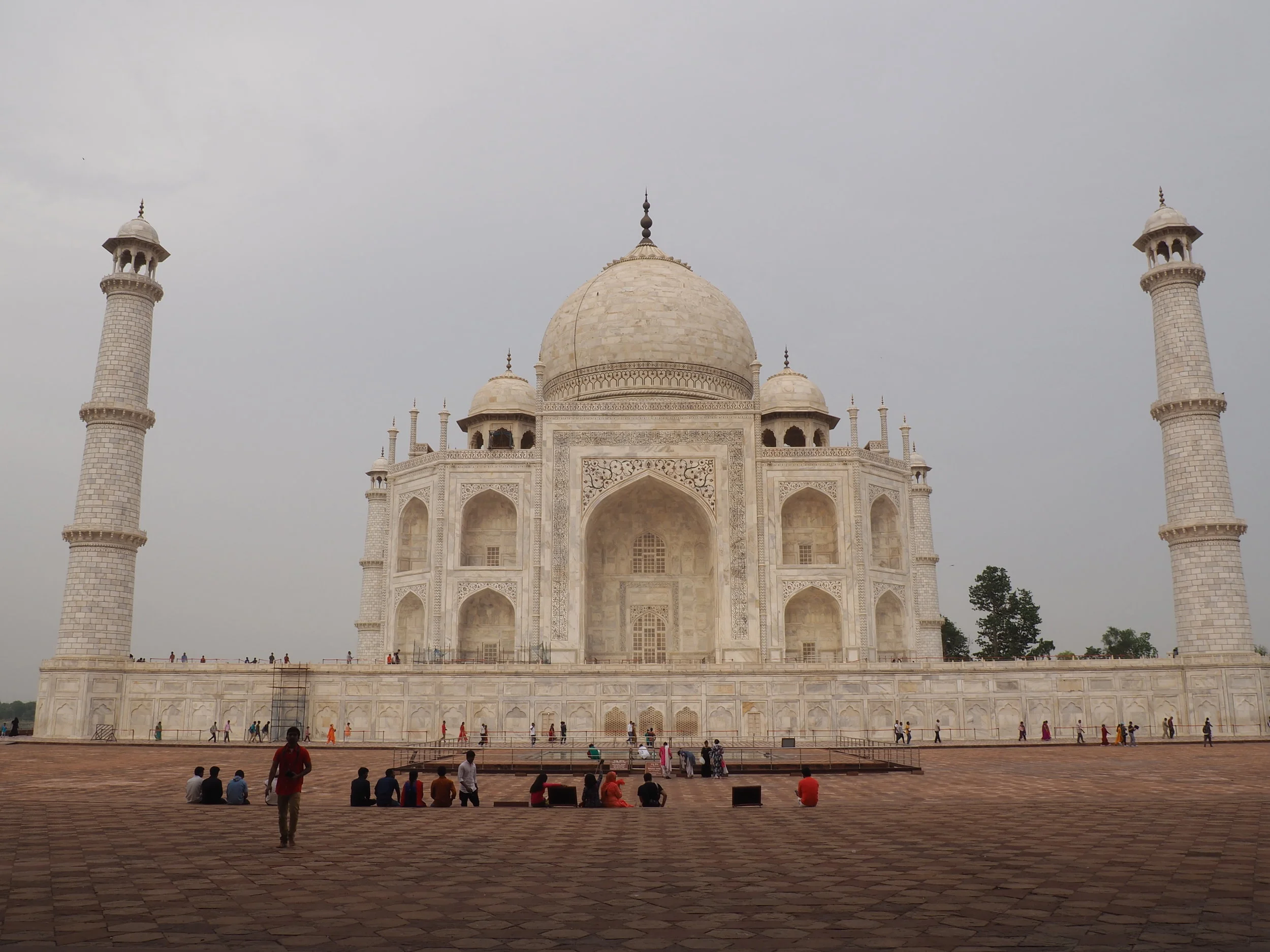
no amount of heat, smog, or intensely cramped traffic jams could detract from my excitement as we made our way through the city. That’s because we were here to cap our trip to India with a visit to the Taj Mahal, one of the 7 wonders of the world! Within an hour we had laid eyes on it for the first time, the marble domes appearing first through a tiny pocket of archway and then revealing themselves in their full splendor as we worked our way through the outer gardens and main gateway. Construction required more than 10 years and 20,000 people, resulting in the single example that best signifies the height of architecture for the Mughal empire.
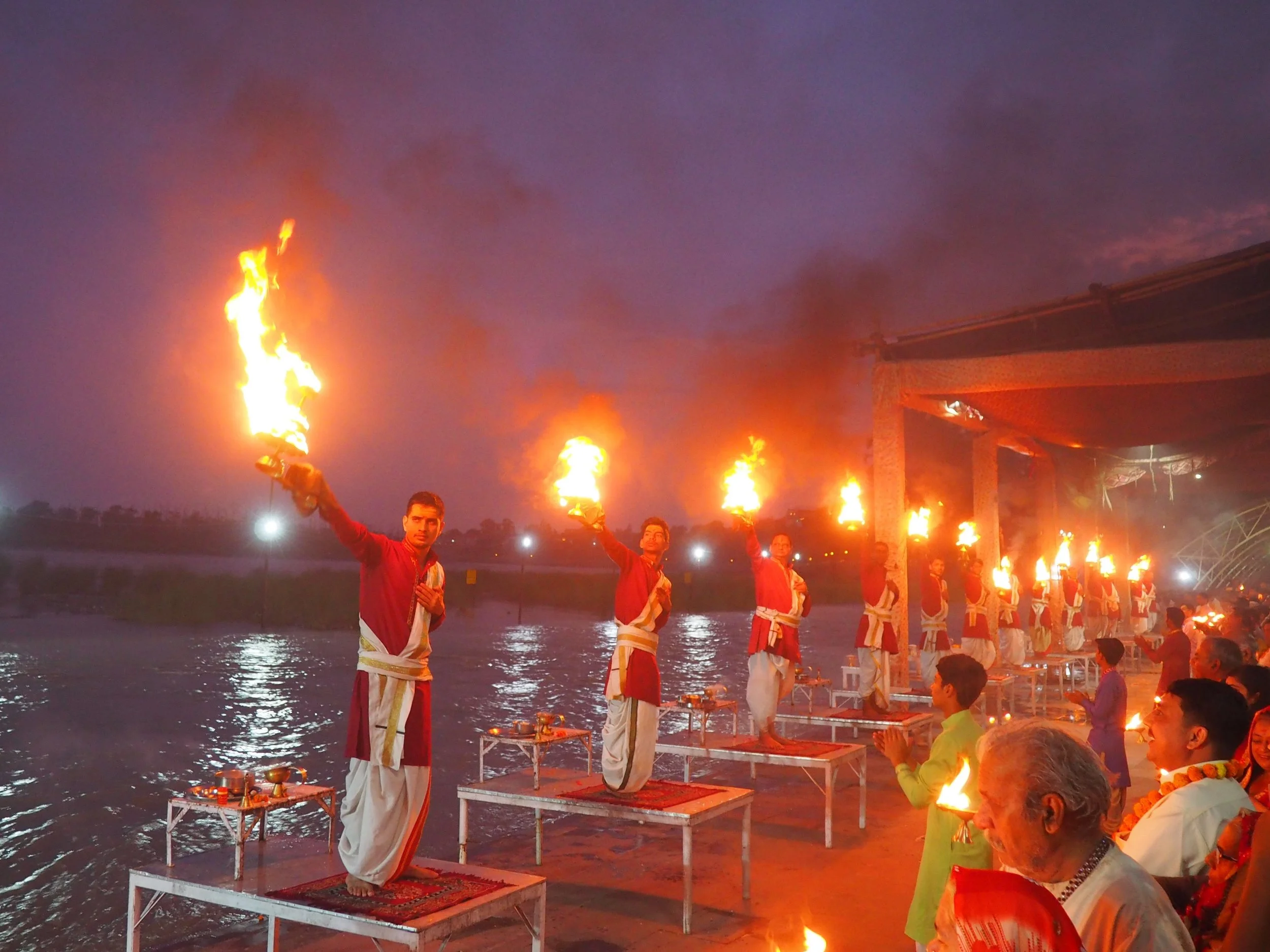
Famous due to its selling point as the birthplace of yoga, Rishikesh has long inspired spiritual seekers. The city is also a draw for domestic tourists and pilgrims because it is situated in the foothills of the mighty Himalaya and serves as the origin of the Ganges river. Hindus consider this body of water to be a living manifestation of their god, meaning they will travel far and wide to pray at its banks and swim in the murky brown waters.

On the outskirts of town there were a few basic campsites, but as the population faded away nature began to dominate. The trees grew more tightly spaced and the undergrowth was thick with weeds and ferns. Eventually we came upon a small waterfall, which was gorgeously reflecting the morning light. Water rushed down across a series of two platforms, splashing and careening over smooth rocks to drown out all other sounds. Isaiah found the locale so peaceful that he almost instantly fell asleep, while I let myself become enraptured by the wild nature and solitude that is all too often difficult to come by in India.

While knees rubbed against noses, guns flew aorund shoulders, tight salutes were exchanged, and gut-wrenching screams were hurled across the border, both crowds exploded with energy. Despite the overwhelming feeling of competition between the two countries which have spilled so much bloodshed in defense of their storied border, there was a single moment of unification. A chant of "HINDU-STAN' began as a murmur and quickly surger to dominate both sides of spectators, a reminder that these two disparate countries share a joint past as a united empire.

We appreciated the seclusion and the magnificent beauty, but began to wonder, “who lives here?” and “where will we sleep?” Besides minor signs of altitude sickness, there wasn’t any physical dragon to slay; rather, just the mental concerns of where the next meal would come from. I sensed the day’s hike was coming to the end; thus, I exacerbated my NYC walking speed to ensure I could be the one to shout back “we have a home to sleep in!” After a slight hill, I turned the corner and saw a lady sitting amongst her barley fields sipping some tea.

Here we could glimpse the larger versions of the furry creatures in all their beauty. They munched on leaves and prowled the grounds with waddling gaits through the constant precipitation, enjoying large morning meals of bamboo. With thick coats of pure white fur and dashing black outlines around their eyes, every time we caught a glimpse of one of the pandas head on it was a shocking sight.

Occupying fertile plains that are hemmed in by a long line of mountains on one side and an expansive lake on the other, the ancient city of Dali has long been the preeminent backpacker destination in China’s Yunnan province. The beautiful natural surroundings combine with an artistic counter-culture to form one of China’s most unique combinations of tourism and local culture.

Picking up speed from a set of rapids further to our right, the river cruised down a smooth plateau and then tumbled over a small cliff which caused everything to explode into a chaotic symphony of beauty. Suddenly huge walls of water bursted forth to swallow everything in their path, mist sprayed upwards like fireworks rising into the canyon, and wave after wave of the mess slowly eroded the rocks which have stood the test of time.

Now it’s one thing for me to describe the landscape here as “alien”, but it’s quite another for James Cameron to use it as a filming location for scenes set on another planet. Our next pit stop was heavenly mountain, the spot where they filmed parts of Avatar. Even without the accolades this individual pillar was mind-bending in the way it continuously rose from the depths of the earth, never widening from its already thin base. Truly, landscapes like this just don’t exist anywhere else on our planet!

Soon we had ascended to the highest point of the trail, which quickly became my favorite place in China. Not a single sound of humanity was audible; instead, an entire ecosystem flourished. Salamanders wiggled into the bushes at the first sights of us, worms squirmed across the pathway, birds fluttered amongst bountiful branches, butterflies surrounded us in the air, bees pollinated bright yellow flowers, and the steady hum of insects accompanied my every move. Finally, we had found a place where nature still reigned free!

Right next to hip artisan jewelry makers and kitschy tourist shops stocked with bedazzled hats, old women sat in circles drinking tea and men played rowdy games of cards. Despite signs of encroaching development, the architecture of the town retained much of its charm. Stone walls separated wooden houses with broad entrances, each one accompanied by red banners to bless the inhabitants. With plenty of flowers, traditional lanterns, and cozy interiors to take in, we took the slowest possible lap around the compact central to soak in the vibe as best we could.

We picked a trail that led back towards the city and found ourselves shrouded by canopies and overgrowth, making us feel like we had found a distinctly wild side of the peak region. From the depths of the forest, we could only hear insects and see wide views of blue ocean and wild islands, making us wonder once again if we were really in a metropolis of 7 million people. As we worked our way back to the tram, the clouds opened up to offer the most spectacular views yet. Suddenly shimmering blue waters split up an endless line of sparkling skyscrapers that reached from the depths of our view up above the highest peaks.

Despite the physical hardships, nothing could detract from the immense joy that seized us upon crossing the proverbial finish line. From the punishing slopes of the first few days to the interminable climbs of the initial ascent to the incredible strength required to cross the high passes, we successfully made it through what we unanimously agreed would be the longest through-hike of our lives.

Mountains enable explorers to feel their inexplicable presence, to stand in wonder under the shadow of something much larger than themselves, to test ourselves against the harshest of alpine landscapes, to feel the stoic stillness of their immovable slopes, and ultimately to simply be present in the midst of nature’s most powerful creations. Welcome to Gokyo, where you can feel the mountains around you!
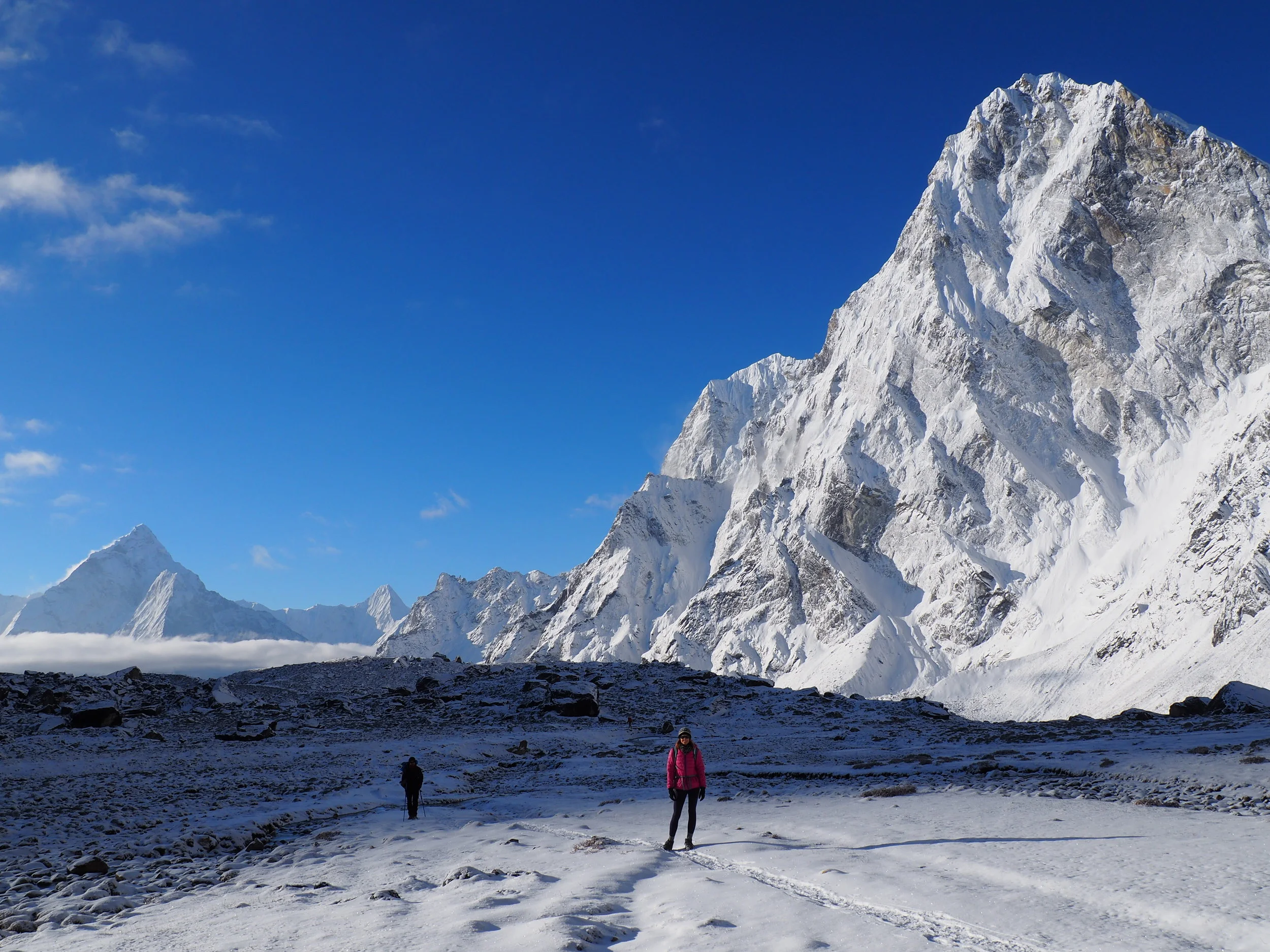
Even within the first hour, the trail was obscenely difficult. Through ankle deep snow, we wound our way up above 5000 meters surrounded by glowing heaps of sparkling snow. In front of us, the path was downright disconcerting: we were headed straight towards a seemingly impassable chain of mountains. Some were deep black, others light grey, but each section of the ridge held its own beauty in the glow of first light. My favorite was a triangular spire which had the intense shape of an arrowhead, its deep black hue contrasting sharply against the white snow and blue skies.
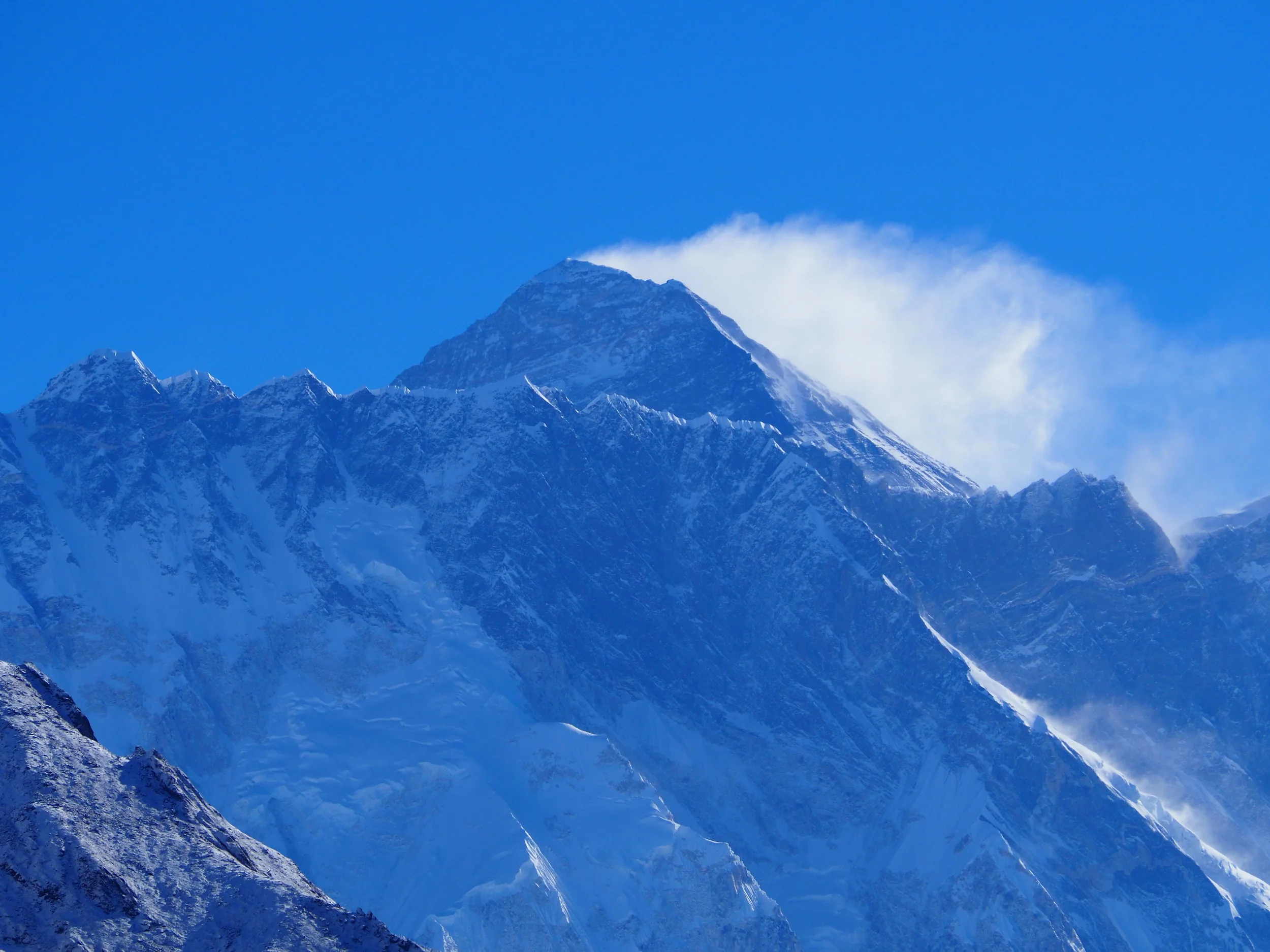
Beyond the views, the thing I could sense most clearly here was the utter stillness. Whereas earlier in the day I could catch wind of a few yak bells echoing up the mountainside, there was now only the whispers of a few gusts and my own breathing to stimulate my ear drums. With the clouds gone and the mountains stoic, the only perceptible movement was of the sun slowly drifting higher into the sky.
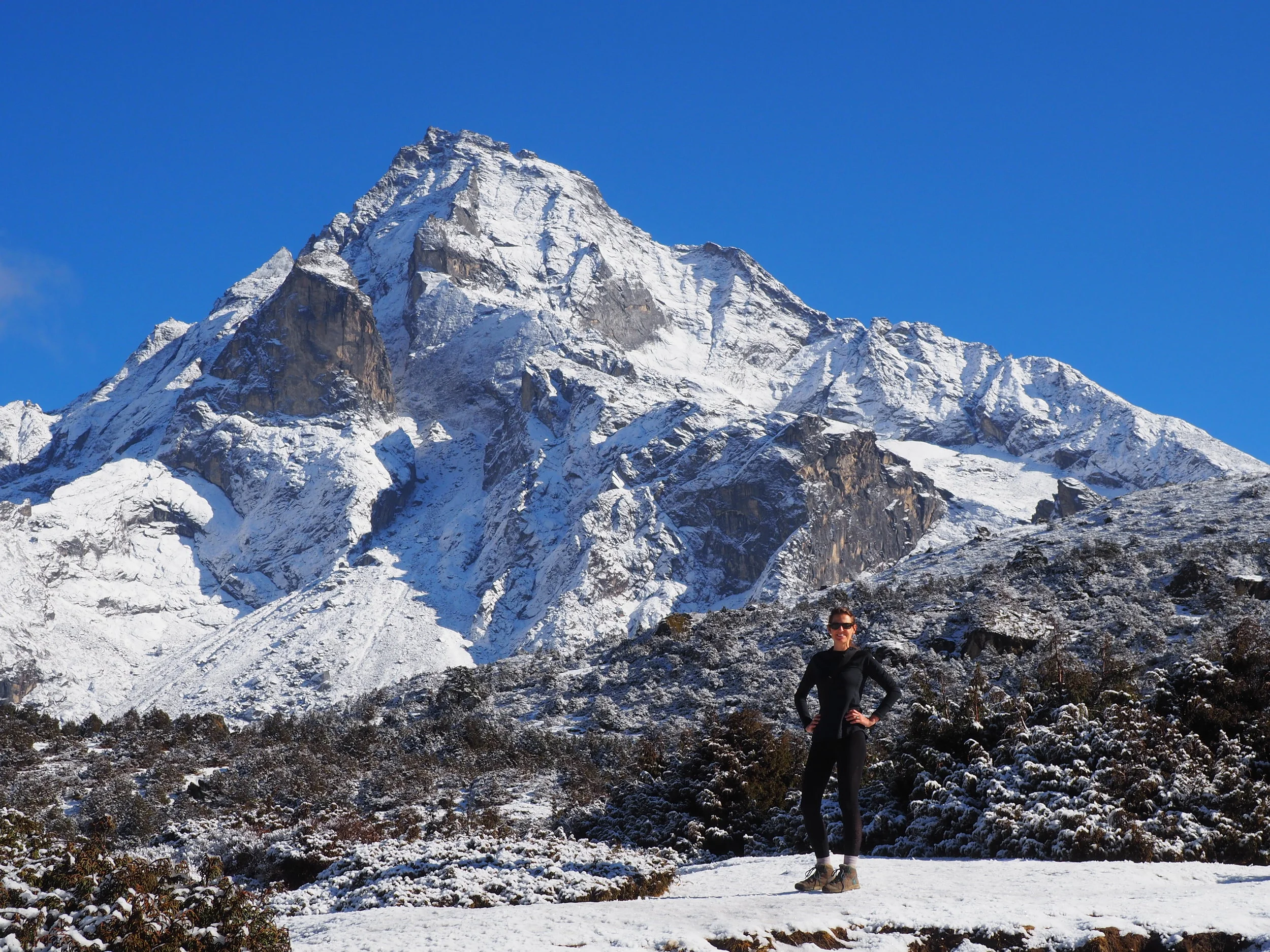
The previous night’s rain that pattered on our windows was snow at this slightly higher elevation, at first appearing as a light dusting on the dirt, then fully immersing the trail and causing tree branches to heave under the weight. Within just 30 minutes of starting, our physical effort was rewarded with surreal views of jagged peaks adorned with a fresh coating of snow. Here evergreen trees flourished; their pungent smells mixed perfectly with the sparkling white dusting to make the whole environment feel like our own personal winter wonderland.
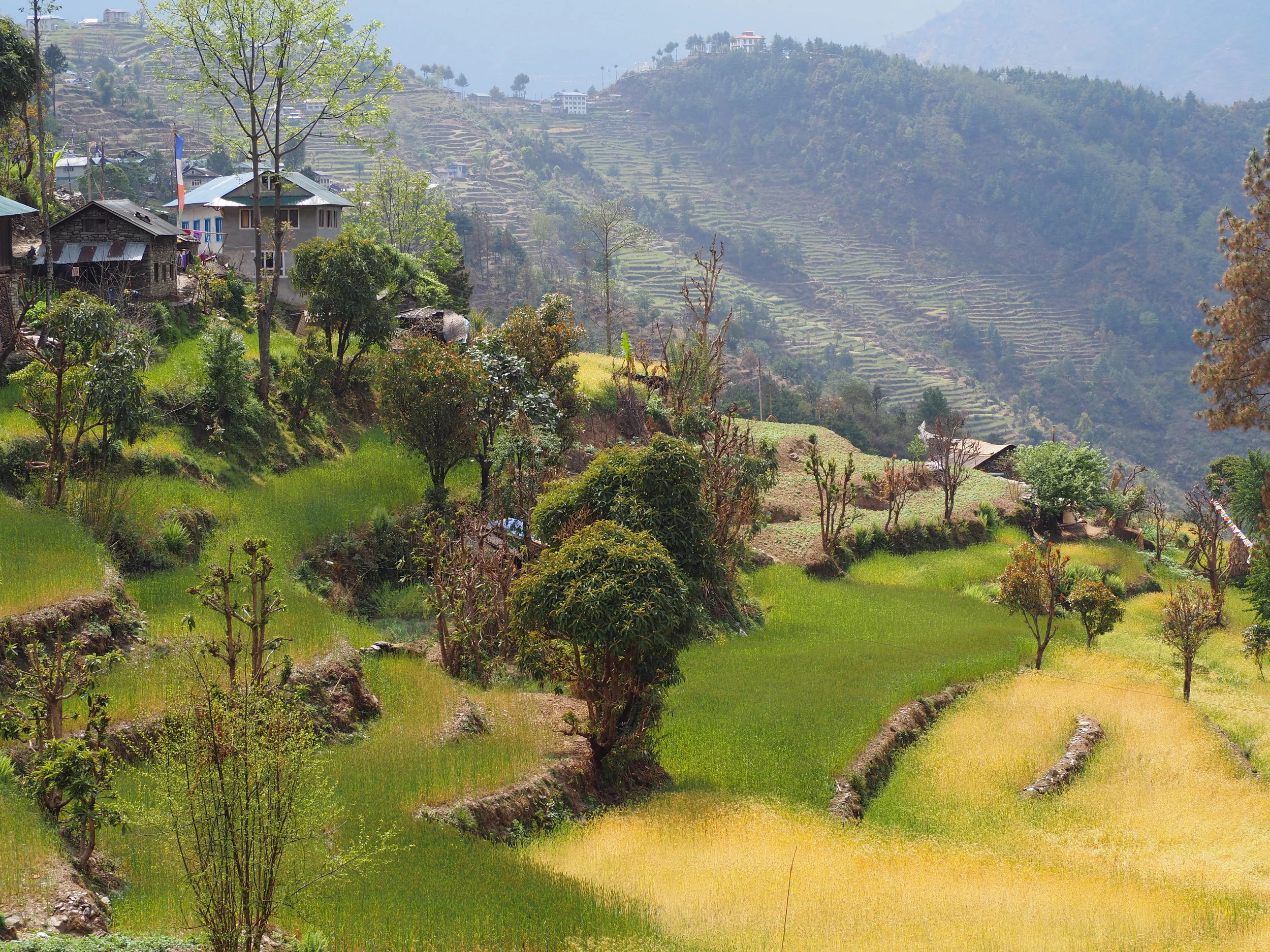
As if to make up for the previous day’s weather, a soft morning glow graced the hillsides as we departed from Salleri and officially began 19 days of walking. At more than 2500 meters (8200 feet) in altitude, it took just a few minutes of walking until our fingers and toes started tingling. We paused to let the blood flow catch up with our bodies, taking in sweeping views of terraced hillsides and broad wooded valleys all funneling deep into a river that roared below.
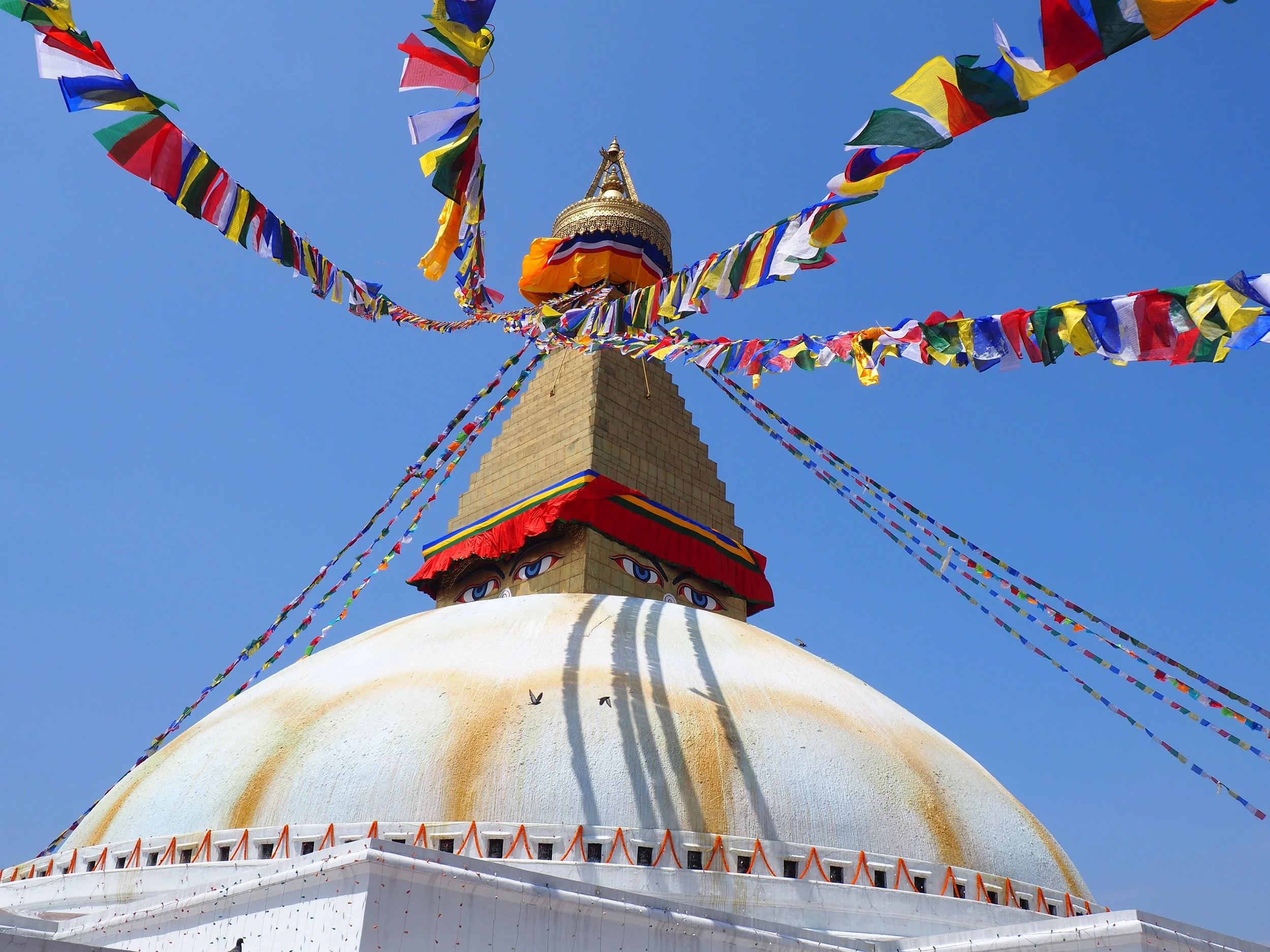
In perfect proportion to the cramped streets were the tiny doors. Each one was so low that even the shorter Nepali people had to stoop to enter, so any hope of me squeezing through would require tremendous effort. Yet within each open door we could glimpse brief snippets of a calmer life: children playing marbles, women chopping vegetables, stray dogs curled up into tiny balls with just a single eye peeking open, and shopkeepers rearranging their inventory.

Out here surrounded by rural communities and nature we began to forget some of the mindsets of society that we had so gleefully left behind. As the afternoon came upon us and the boat docked, we disembarked for a walk along on the many riverside paths. Lined with houses ranging from unfinished construction project to beautiful villa, each and every local greeted us with a smile and a wave. The friendliness seemed to emanate off of them, leaving us with fond memories of this destination.

On Sunday morning our breakfast was framed by a mountain and a luscious garden featuring flowers with shades of purple, gold, red and yellow. The scenery foreshadowed a spectacular day in nature. An hour long bus ride from our guesthouse into the town of Munnar brought us through gorgeous rolling hillsides dotted with teal plantations and vegetable farms before depositing us in the dirty and hectic city center. But soon enough we were aboard a rented scooter, whizzing again through a calm country road.

Beneath our feet and above our heads, the entire tour was a constant reminder of the skill and craftsmanship involved in creating a building of such repose. Every single pillar was extensively carved, every single archway designed with unique details, and every single door told an entire epic’s worth of stories about the people of Mysore. Our path led along the cool and colorful tiles to an outdoor wrestling courtyard highlighted by two stone sculptures of snarling lions. The scene looked perfectly prepared for the next trial by combat from Game of Thrones.

From a sloping, boulder-strewn hillside sporting a dozen more pyramid-shaped temples and multi-story stone buildings, we got our first taste of Hampi’s unique landscape. Mounds of boulders rose to magnificent heights in the distance with precarious rock formations making it look like God had been making sand castles. By combining this bewitching view with the seemingly endless choice of temples and it became clear we were going to enjoy ourselves in this little enclave of history.

Friday morning I awoke early and went out on the prowl for some coffee. Walking through the quiet sandy backstreets felt like a lucid dream: locals greeted my curious gaze with friendly cries of “good morning”, streaming rays of sunlight peaked through the fronds of palm trees, and my nose eventually led my feet to a German bakery sporting freshly brewed espresso and baked croissants. With the town still slowly waking up and only the faint intrusion of a few motorbike honks cutting through the endless supply of bird song, I felt as though I had uncovered my own personal paradise.
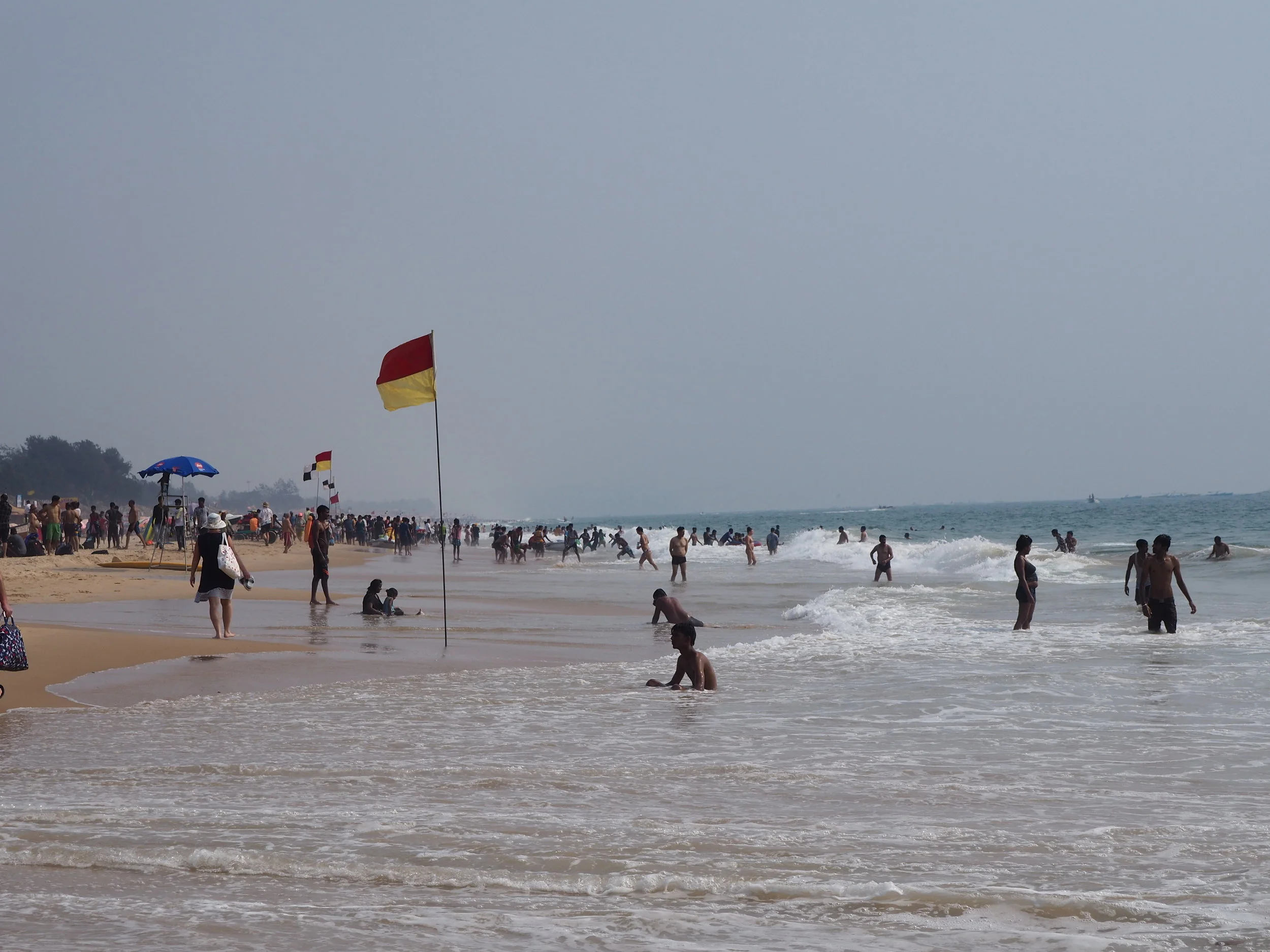
Finally the journey was complete when we reached the tiny overrun town of Arambol. Whether your native tongue is English, Spanish, Italian, Russian, German, or Hebrew, you can be sure you’ll hear plenty of it amidst the diverse tourism community of this village. The industry runs on two distinct yet intertwined promenades. The main drag sports every possibly kitschy souvenir shop, budget restaurant, and motorcycle rental outfit your heart could ever desire. Meanwhile, the beach is a collection of bars, restaurants, and palm-roofed huts backed right up against the surf. Here is one of the few spots in the world where you can order a cold beer, an Indian dosa, or a hamburger at every hour of the day.
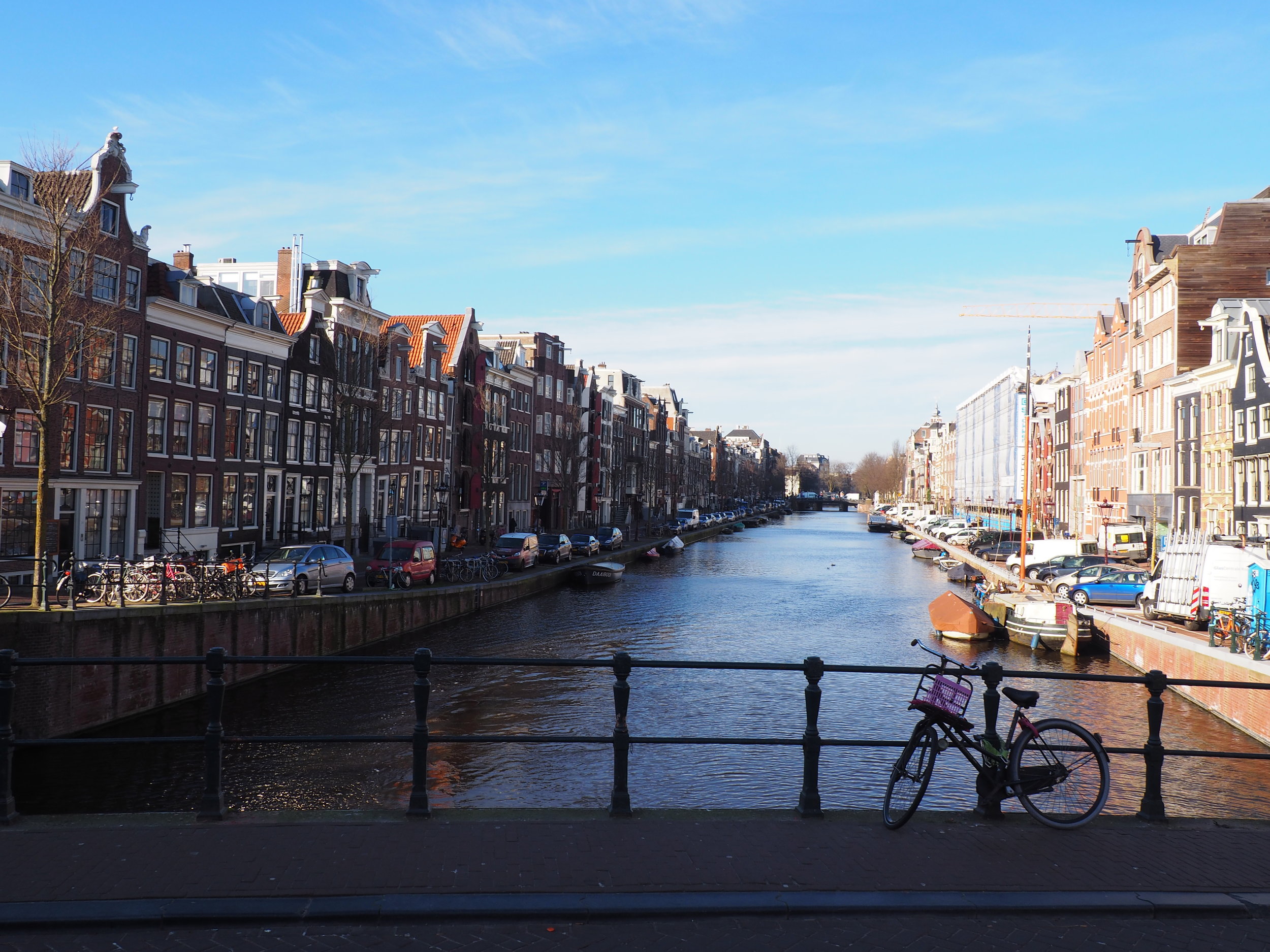
Over the last year and a half, I've had the distinct pleasure of calling Amsterdam my home. It is a place that defies any description or platitudes that you may heap upon it, as words inevitably fail to describe the ever-changing nature of this city. But that won't stop me from trying.
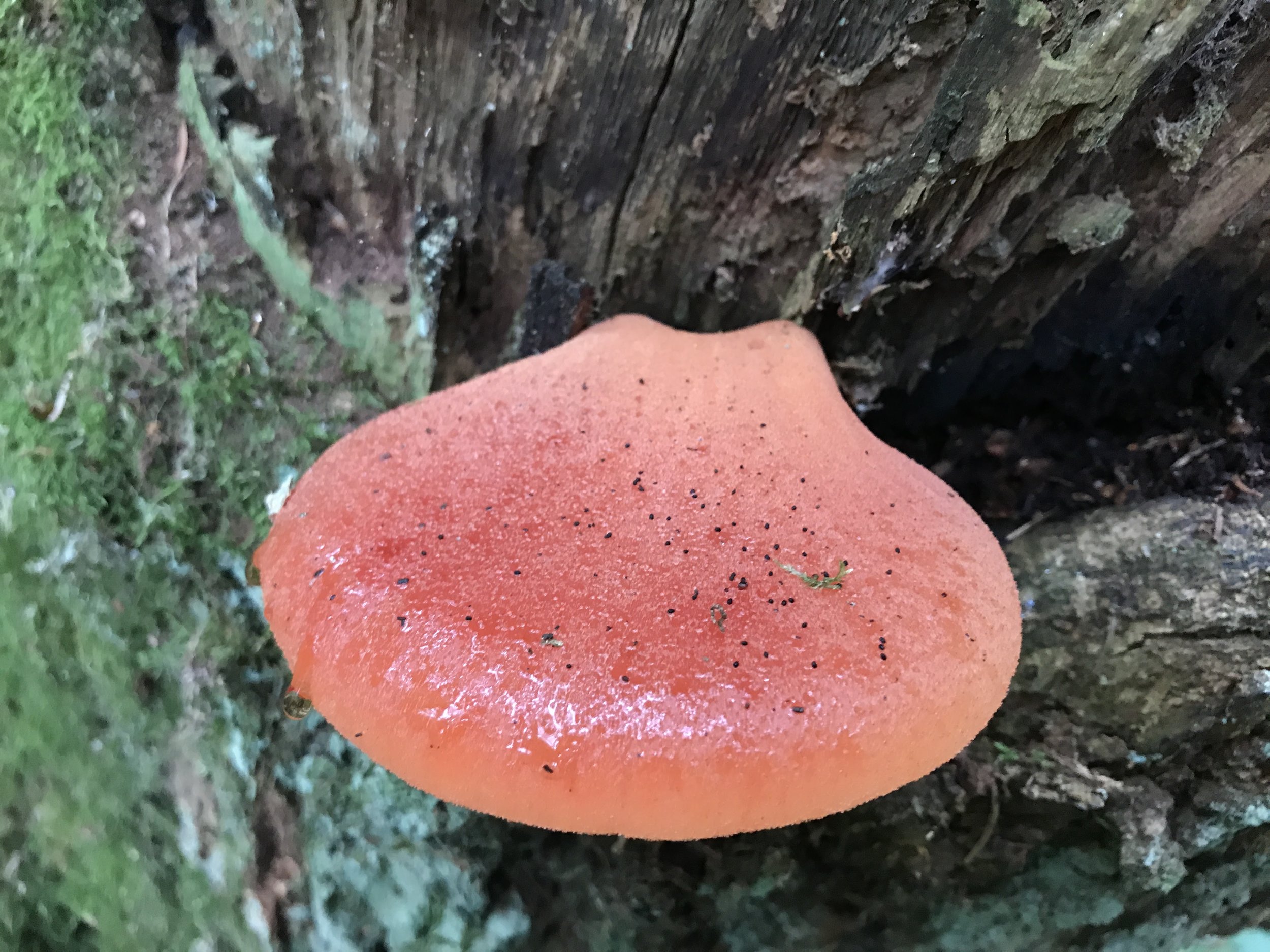
Join me on an exploration of the spectacular mushrooms and mountains of the Belgian Ardennes, a range just South of Holland. I set out on a hike in the region with Stefje and her family on a crisp fall day and we were amazed to see the wealth and diversity of mushrooms after a recent rain storm. Nature is truly bountiful!
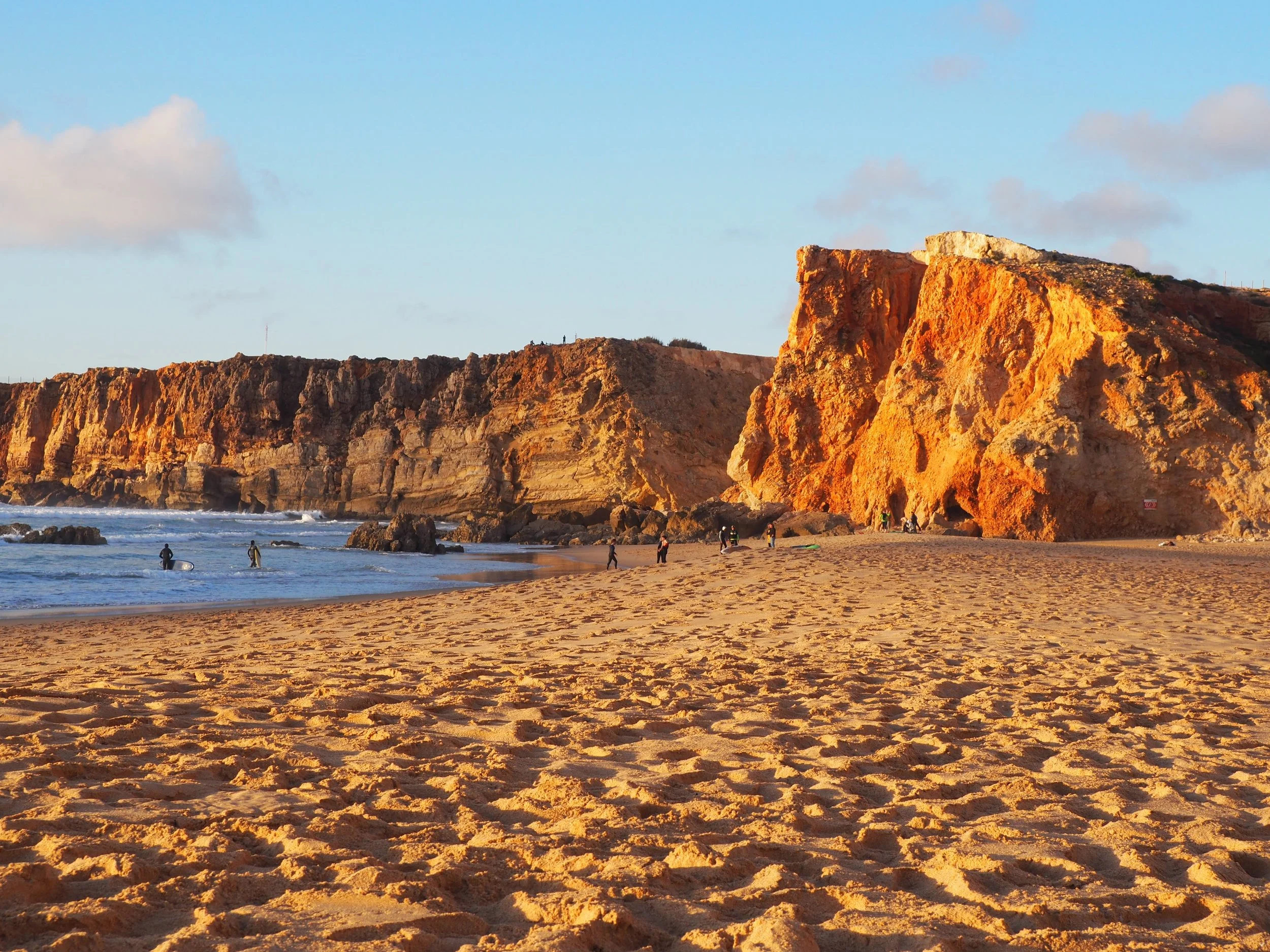
Last Friday morning, Stefje and I bade farewell to the grey skies and perpetual cold of December in Amsterdam, transporting ourselves both mentally and physically to sunnier locales. Just a few hours later, we were walking on the beach outside the town of Albufeira in Portugal, happily reunited with our friends Diana and Luca a few months removed from their last sighting in Europe.

Perched in the hillside amongst a dense grove of trees was the perfect Austrian bar. As we reclined outside to soak in the spectacular panorama of the lake, music, shouts, and singing erupted from the packed interior. Inside the bar people had clearly been drinking since early in the day, providing a welcoming and engaging atmosphere that enchanted Stefje and me.

Through three layers of forest and 2,000 feet of elevation gain, we pushed through fatigued muscles to truly earn the resulting vistas. The only constant here was remarkable beauty. Frequent rains in the Soca Valley meant the entire forest floor was covered with vegetation: mosses, ferns, sapling, and thick-trunked trees made our surroundings feel more like a jungle than a pathway.
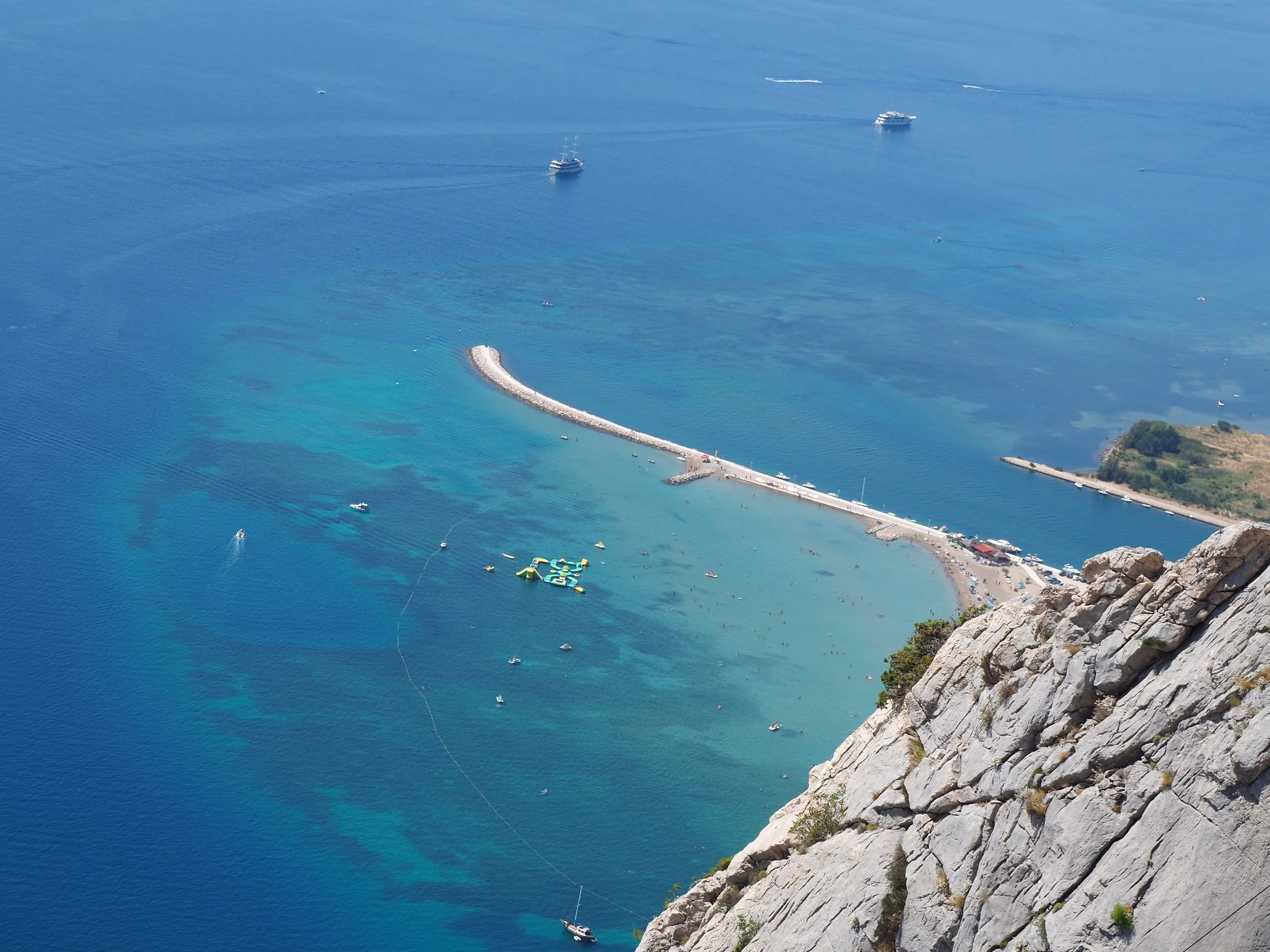
After a refreshing dip, we decided to set off for a hike along the hills in hopes of capturing a gorgeous afternoon view of the coastline. The path wasn’t too steep but it was unyielding in its incline. Switchback after switchback punished our valves and poured sweat down our backs, yet I was too occupied with the view to feel the pain. Instead, I just found myself gazing in wonder at the spoils of this natural paradise.

Amidst walking tours, an overwhelming number of pedestrians, and restaurants lining every square inch of available real estate, we kept our eyes craned upwards at a wealth of ancient architecture that transported us back in time. A long walk along the city’s port had us relishing in the atmosphere of the city: a crisp sea breeze, a hidden cove of ships, and finally a perfect sunset that struck just as we crossed the in front of the city’s largest palace.

What seemed like just a few minutes later we were awoken by the sun on a clear Friday morning in Budapest, eager to set off and see what the city had to offer. It only took a few minutes for our eyes to bulge with outlandish neo-classical architecture in the form of the grandiose St. Stephen’s Basilica. It hadn’t hit the priority list of our vague plans for the day, but we immediately made a detour to accommodate exploring the massive dome which rose up like a sentinel standing guard of the city center.

Our path continued across the plaza to Las Ramblas, perhaps the most famous street in Barcelona. Cutting diagonally from the plaza directly to the Mediterranean Sea, the wide avenue was packed with exactly what you might expect from any shopping experience in a developed country: McDonalds, Nike, H+M, and all the other popular brands. Yet halfway down the street we turned straight into something decidedly Spanish, La Mercado de La Boqueria. The market was an onslaught to the senses: fruits of every color were stacked to the ceiling, pungent whiffs of fresh seafood assaulted our nasal cavities, and each stall was staffed by boisterous salespeople shouting for our attention.

So far my favorite aspect of living in Amsterdam has been the ease of traveling to other wonderful European cities. In November I was lucky enough to have my parents visit in Amsterdam and after a week of exploring the Belgium and the French countryside, they agreed to meet us for a weekend in Paris.
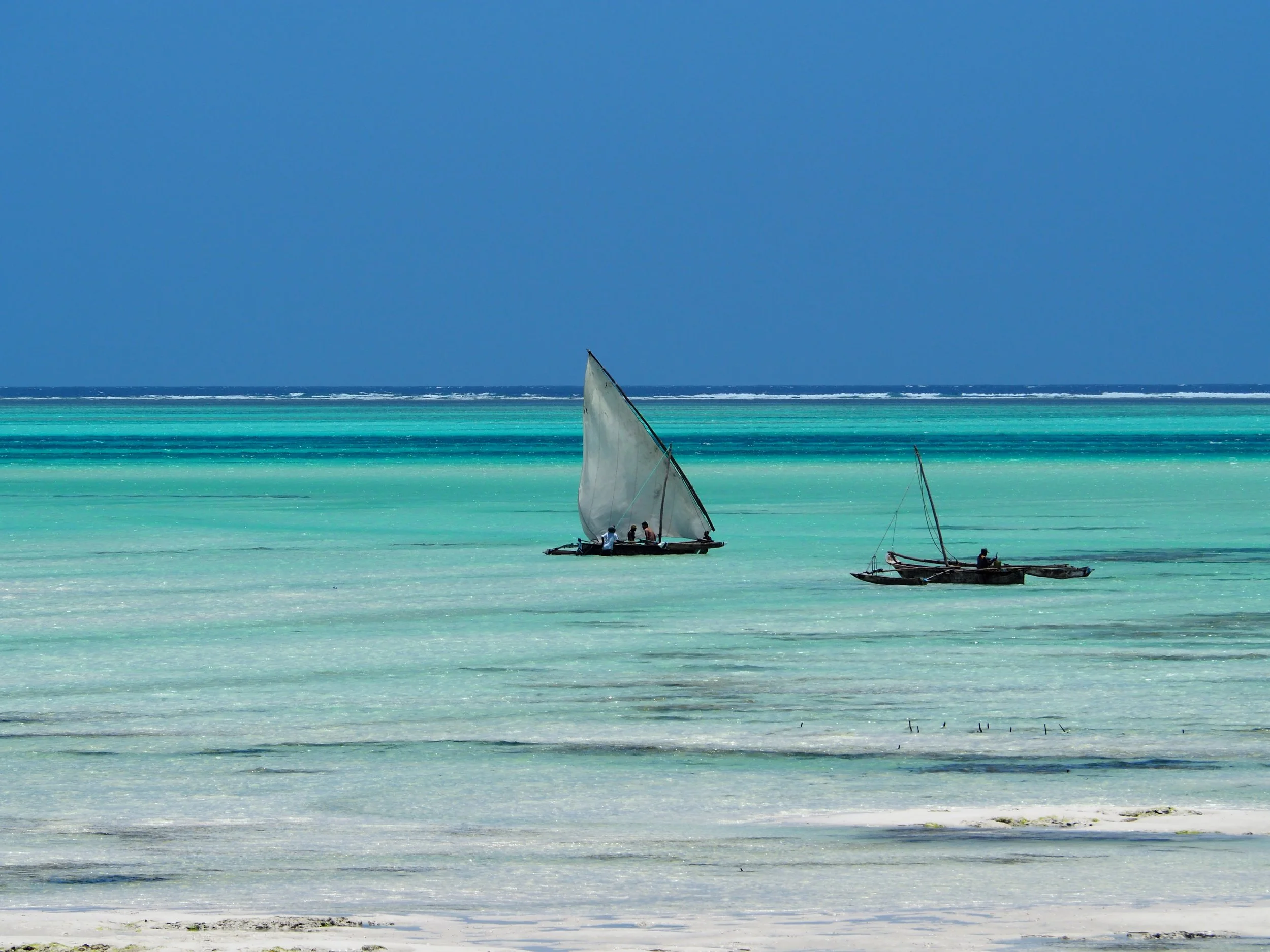
Deep turquoise waters confirmed our arrival in tropical paradise. Our room was cozily set within the confines of a collection of thatched-roof cottages and wooden lounge chairs, just 10 steps from the ocean. Before even taking a sip of my welcome cocktail I was neck deep in the salty waters, swimming against the current and basking in the afternoon sunshine that glinted across our view.
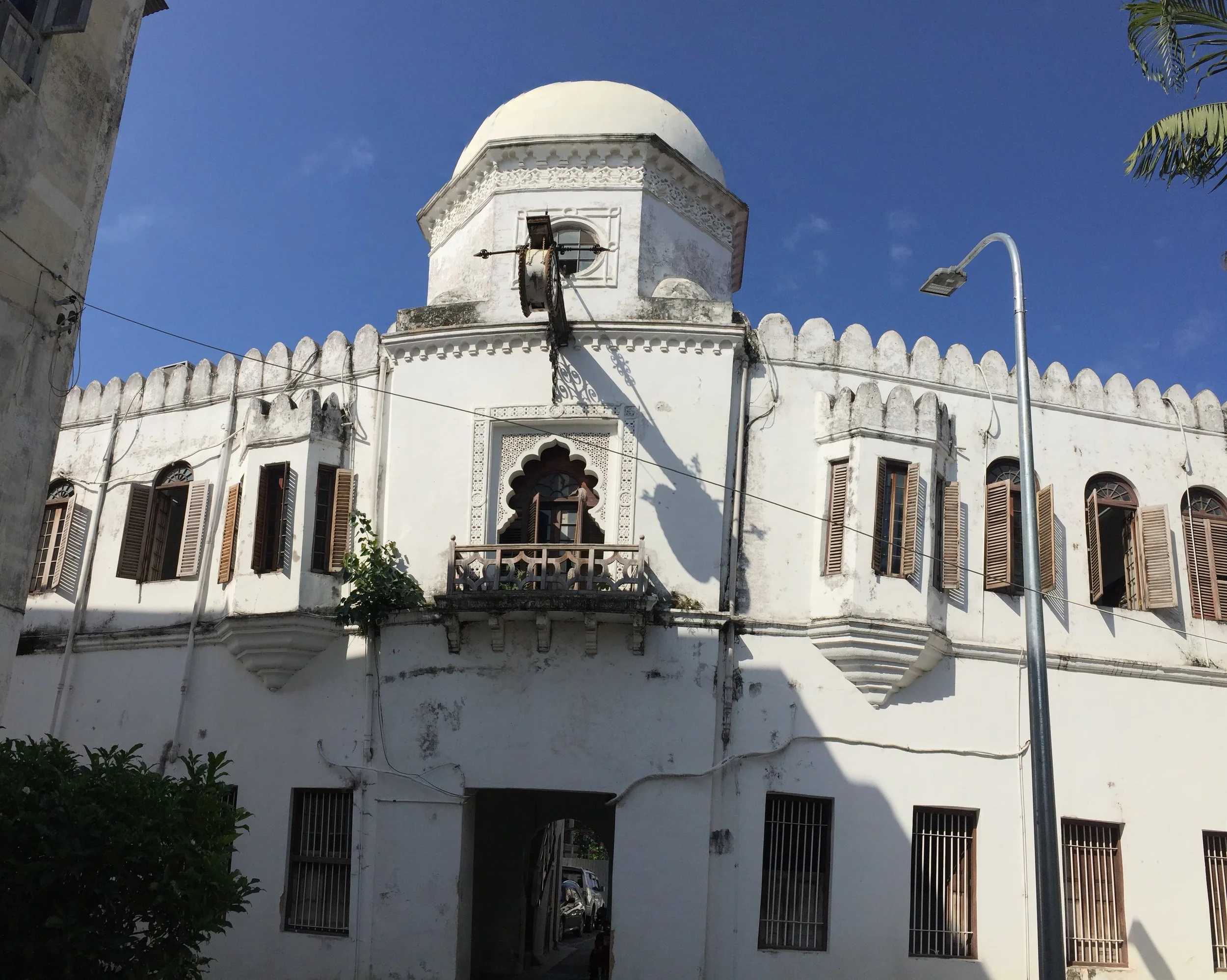
A fascinating amalgamation of Asian spices and Arabian architecture, European tourists and African local, dazzling palaces and decrepit ruins, Zanzibar's stone town is a clash of cultures. Dizzying alleyways connect brand new Hiltons and Hyatts with buildings that date back hundreds of years, when this island served as one of the first major trading ports in the Indian Ocean.

From one crested vantage point, Stefje and I paused and could count 20 different species of trees, with the knowledge that we were probably missing many more. The Eastern Arc mountain range consists of 13 unique and separate ecosystems, each one evolving parallel to the others. The natural result is that this small segment of Africa contains more species of trees than all of Europe and North America combined!
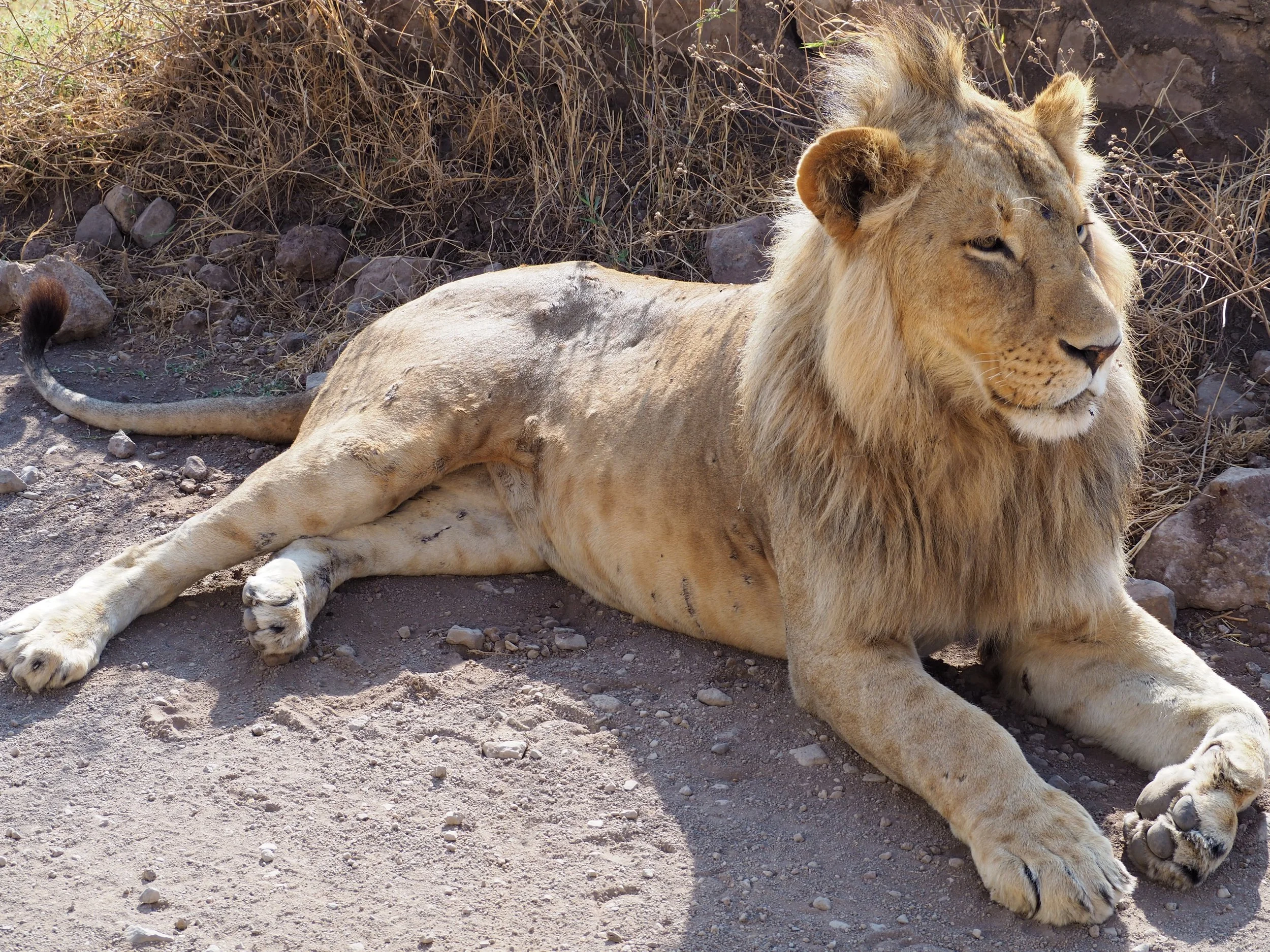
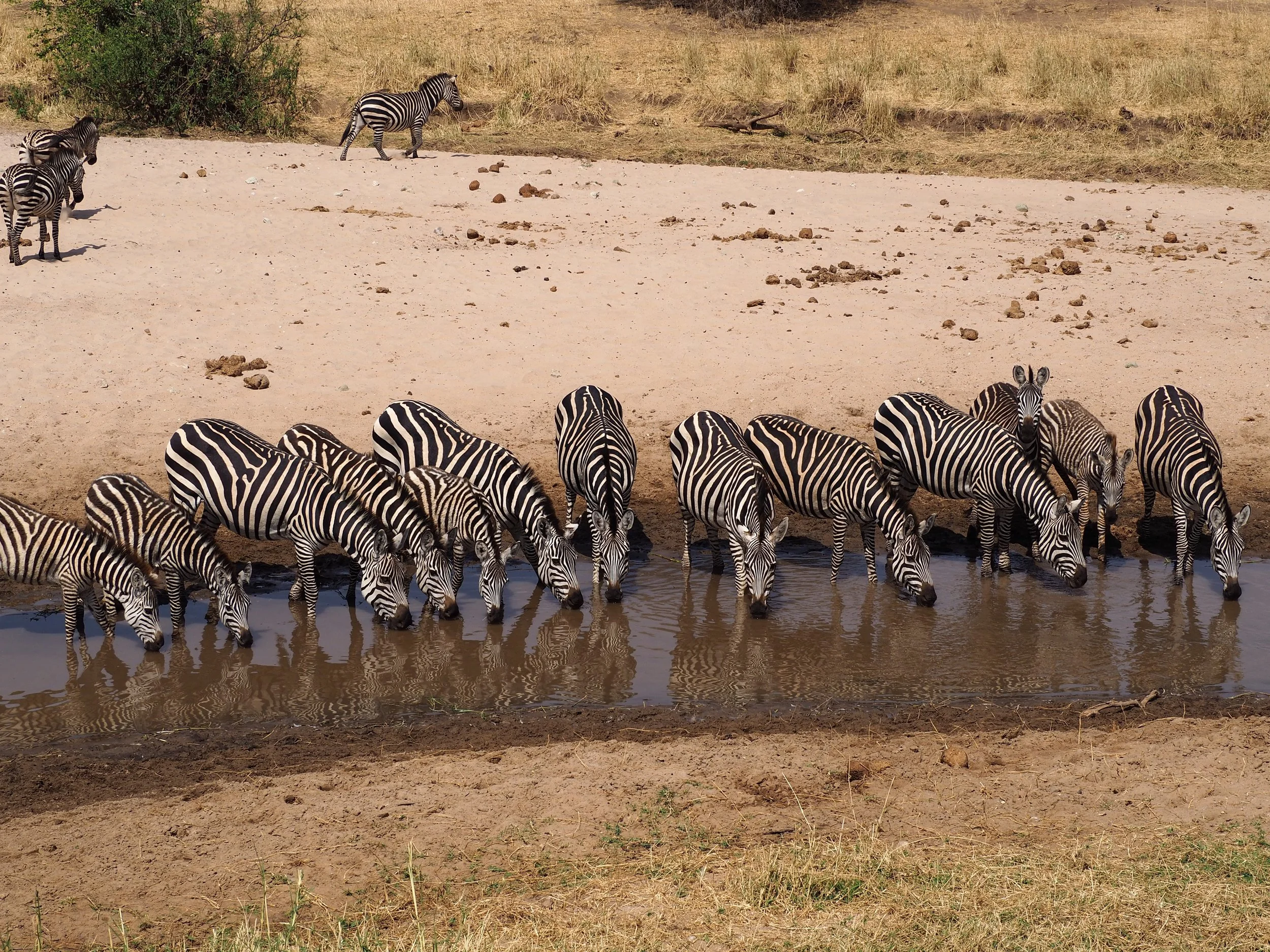
Compared to the animals present in the other parks we had visited, the sheeer density of the crater blew me away. Here predators and prey coexisted within yards of each other; gazelles were unpretrubed by the presence of lions and wildebeests nonchalantly made room for a passing elephant.

Although after three days on safari our eyes were feeling a little spoiled, I doubt anyone could become jaded enough to not appreciate what we saw next. Grazing on the side of the road was a herd of elephants: 3 adults, 2 adolescents, and a pair of youngsters not more than two months old. The babies were more interested in rough housing than placidly enjoying breakfast like their mothers. They explored the surroundings with their dextrous trunks, smacking each other playfully like a pair of human siblings.
Even lunch was a barbaric affair. As jeeps settled into a picnic spot, a proud baboon perched on a railing, exposing his impressive chest.A few minutes later he transformed from a calm observer to a wild beast. With reckless abandon and absolutely zero fear of humans, he catapulted over the railing, bounded onto a picnic table, scared the people away, and grabbed as much food as he could. By the time a guide came over to shush him away with a stick, he had a sandwich in his hand and a juice box in his mouth!

Talalla has achieved an odd balance as a beach town. Only foreigners and local villagers coexist on this tiny crescent of fine sand; other Sri Lanka visitors haven't yet made this a popular destination on the map. As such, old fishermen equipped with plastic bottles and long strings of hooks still navigate deftly amongst tourists and swimmers. In the streets, school children excitedly waved hello every time I passed by. Yet local acceptance hangs in a delicate balance; should Talalla follow the development cycle of its more popular sister cities along the coast, backlash is inevitable. Trash will accumulate, irresponsible visitors will propagate, and a way of life that has worked for decades will quickly dissolve away.

As our jeep rattled on through the plains, our tour guide stopped intermittently to point out plenty of animals which our eyes glossed over and he was able to spot. Jackals moved swiftly in the distance and herds of deer were spooked by oncoming cars. Monkeys rustled in the treetops, taking a break from their morning snacking to spy on us.
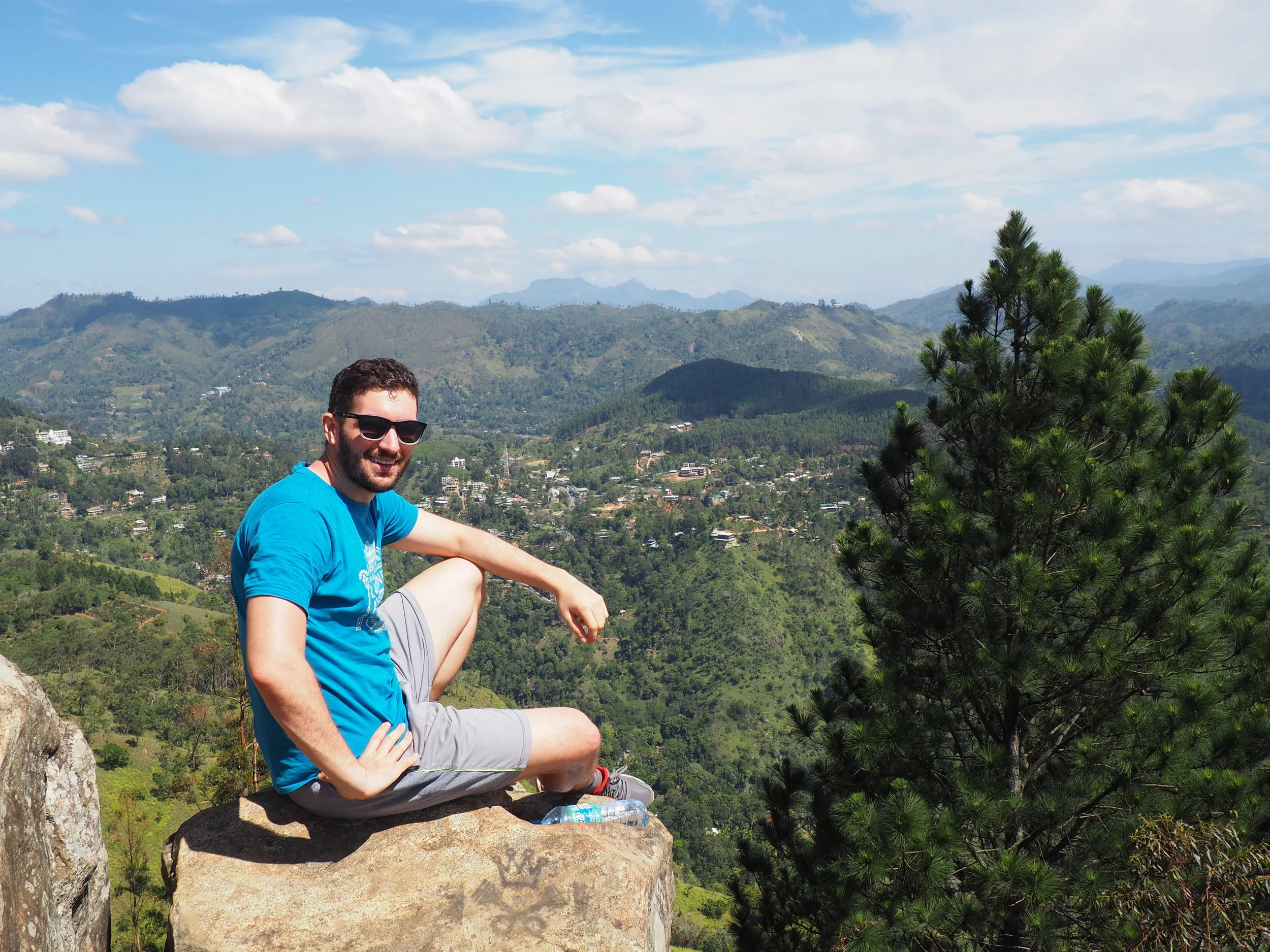
The last two hours of the journey were perhaps the most breathtaking. Here the speed slowed as the number of curves increased, but the stops were few and far between. Now trees began to truly dominate the landscape: the exhilarating views on both sides of the train offered dramatic cliffs, towering palm trees and thick jungle undergrowth.

After months of living in and visiting the cities of Europe, for me the highlight of the train was taking in the natural scenery. Barely a few minutes could go by without green foliage or forests, and as we approached our final stop of Habarana the jungle seemed to fully envelop us...

Dramatically set amidst long beaches and dramatic cliffs that rise directly from the ocean, Rio de Janeiro is the original home of Portuguese Royalty in the New World and centuries later, still a city of immense international importance. It’s citizens have seen it all in recent years: a corrupt government, rampant poverty amid an intense economic crisis, the 2014 World Cup, and the 2016 Summer Olympics. Both of these international sporting spectacles have come under harsh scrutiny for their lack of planning and unfulfilled economic promise, igniting the city in opposition against establishment forces. Yet behind the tough facade lies a city of six million brash and beautiful Brazilians who are eager to demonstrate their loving pride for la cidada maravilhosa: the marvelous city.

Along the North side of the island we encountered untouched nature: striking rock facades protruding directly from the rolling green hillsides, deserted beaches without a soul in sight, and flocks of majestic birds headed out for a morning fishing trip. Following a swarm of similar boats on the same tour, our driver pulled into the pristine waters of the Laguna Azul and we all eagerly jumped in. Here the water was so clear it seemed unnaturally photoshopped, as a tiny island jutting out from the shore captured the current and provided a prime spot for fish to congregate.

Paraty is undoubtedly paradise. Stefje and I made it our mission to see as much of the islands and beaches that surround this amazing locale, so we hooked up with some other members of the hostel for a boat tour through the bay. In the distance the overgrown islands demonstrated the area’s spectacular propensity for life. Year round sunshine and winter rains ensure that nature dominates here, sprouting up thick forests, fruit trees, and palm branches spreading shade over every square inch of land.

We engaged in one of my favorite activities for getting to know a neighborhood first-hand: strapping on a pair of walking shoes and pounding the pavement one step at a time. Vila Madelena is São Paulo’s best for nightlife, with dozens upon dozens of bars coming alive in the evening hours. Yet during the day it was a curious case study as well, as just one block could include a brand new restaurant, a boutique shop, an apartment building, and an art gallery, each occupying no more than 10 meters of storefront.

We were still hundreds of yards from the view when the mist began hitting us in the face. As we approached, clouds of spray flung from the water hitting rocks far below ensconced the platform, leaving everything constantly deluged. Yet whenever the winds shifted and the views cleared, the result was a visceral experience. For 270 of the 360 degrees around us the falls dominated, dropping 1.5 cubic tons of water every second.
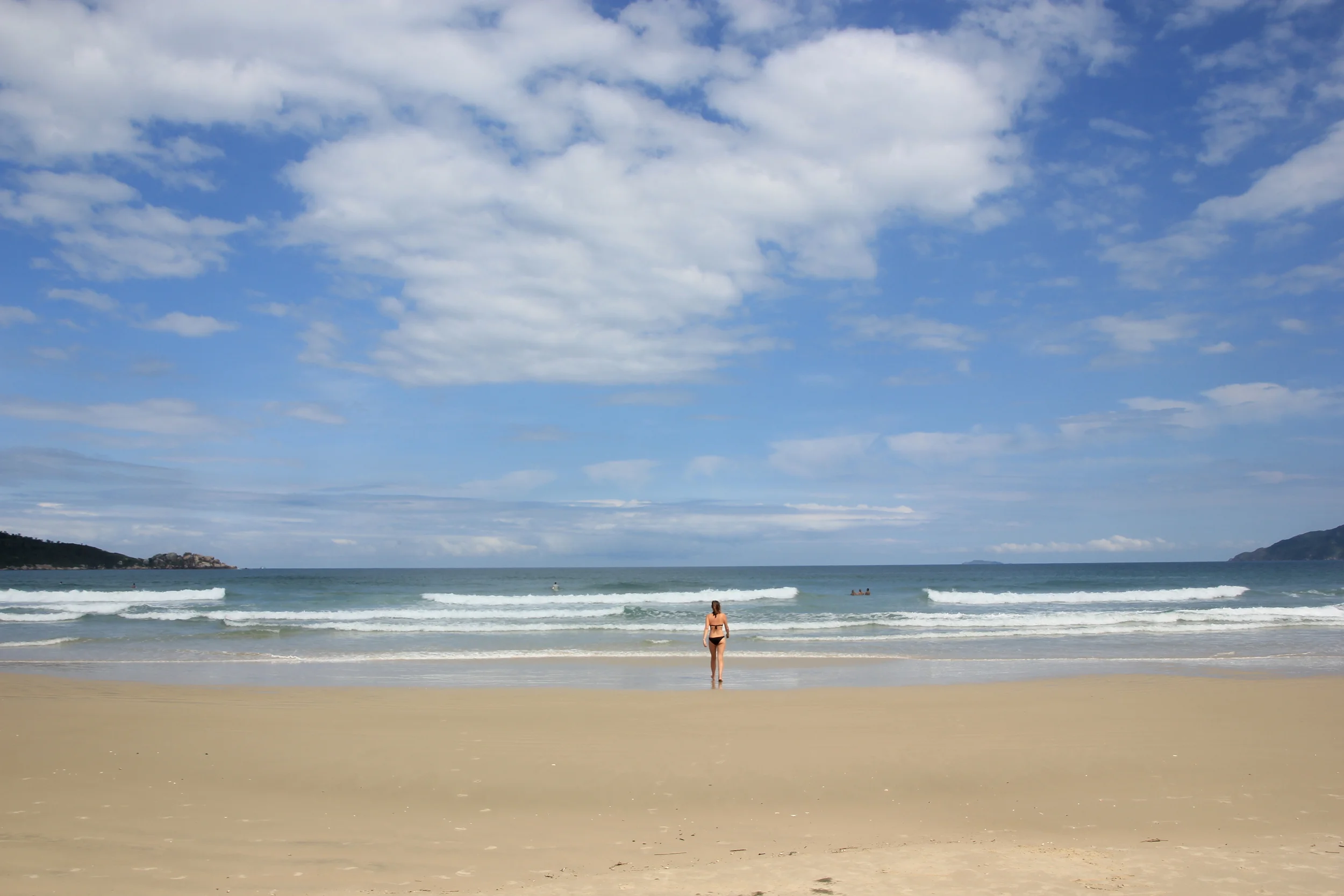
As spirits began fading and legs began aching, the tables turned and the trek down the mountainside commenced. Morale was understandably buoyed by the mother of all views: our first glimpse of Lagoinha do leste. What a paradise it seemed! Protected by the cradle of a semi-circle of mountains, with a set of dunes in front and not a road in sight, the crescent-shaped beach is one of Mother Nature’s masterful works. An endless string of head-high waves broke steps from the shoreline, setting off a race to see which overheated hiker could take the first cold lungs. We body surfed the waves and dried out on the beach, kindling a feeling of deep relaxation amidst the solitary environment.
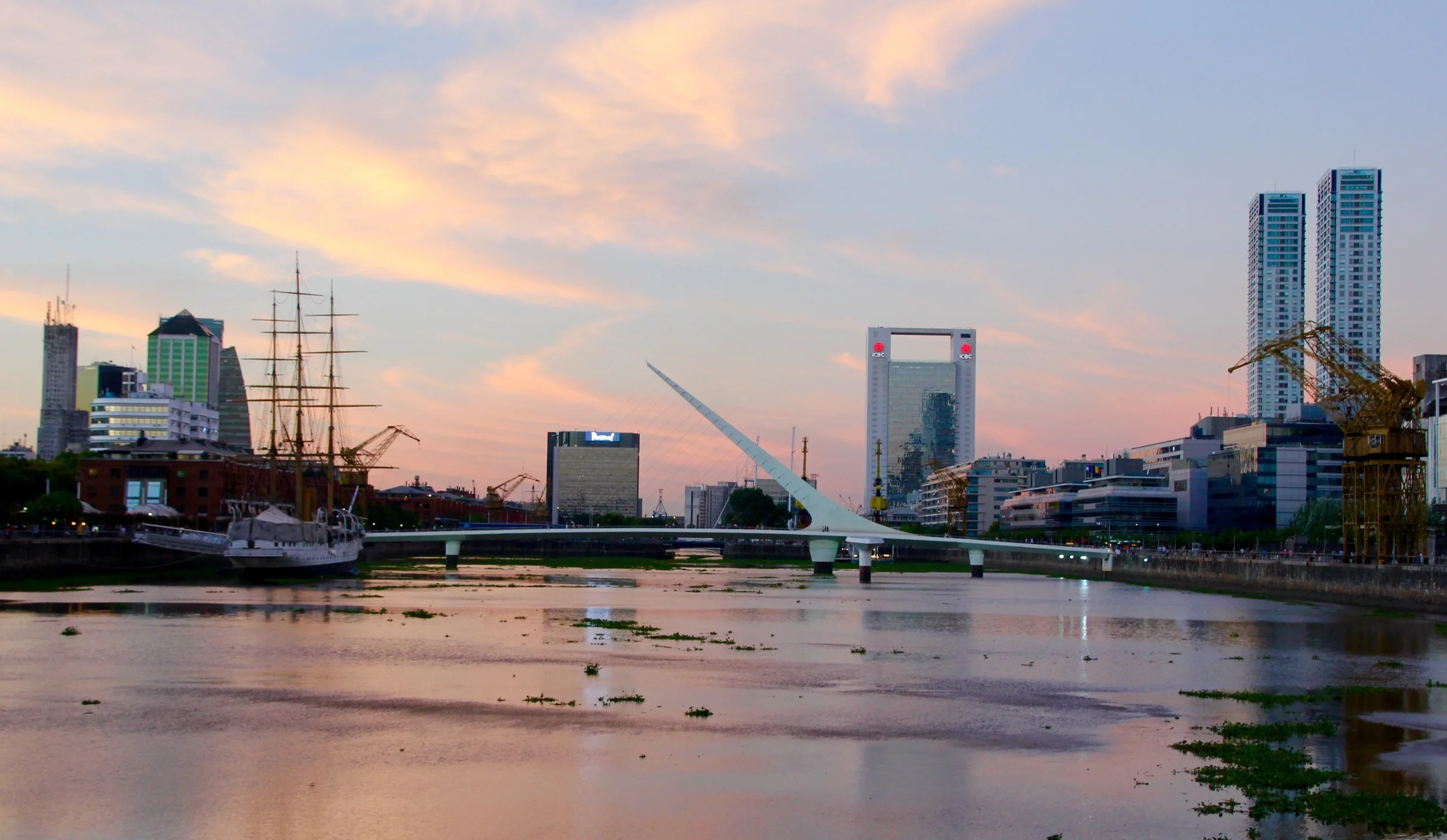
Buenos Aires is a city of constant motion. It’s a meeting point where Argentinians young and old come to live, study, work, and (most importantly) play. It’s the destination where millions of eager tourists each year begin and end journeys through South America. It’s unequivocally the most important city in Argentina, the heartbeat of the country. Unlike the United States, where different cities dominate their respective portions of the economic and social lexicon, Buenos Aires is the hub of everything. This is a city that’s alive: it has a feeling of serendipity, wonder, and awe.
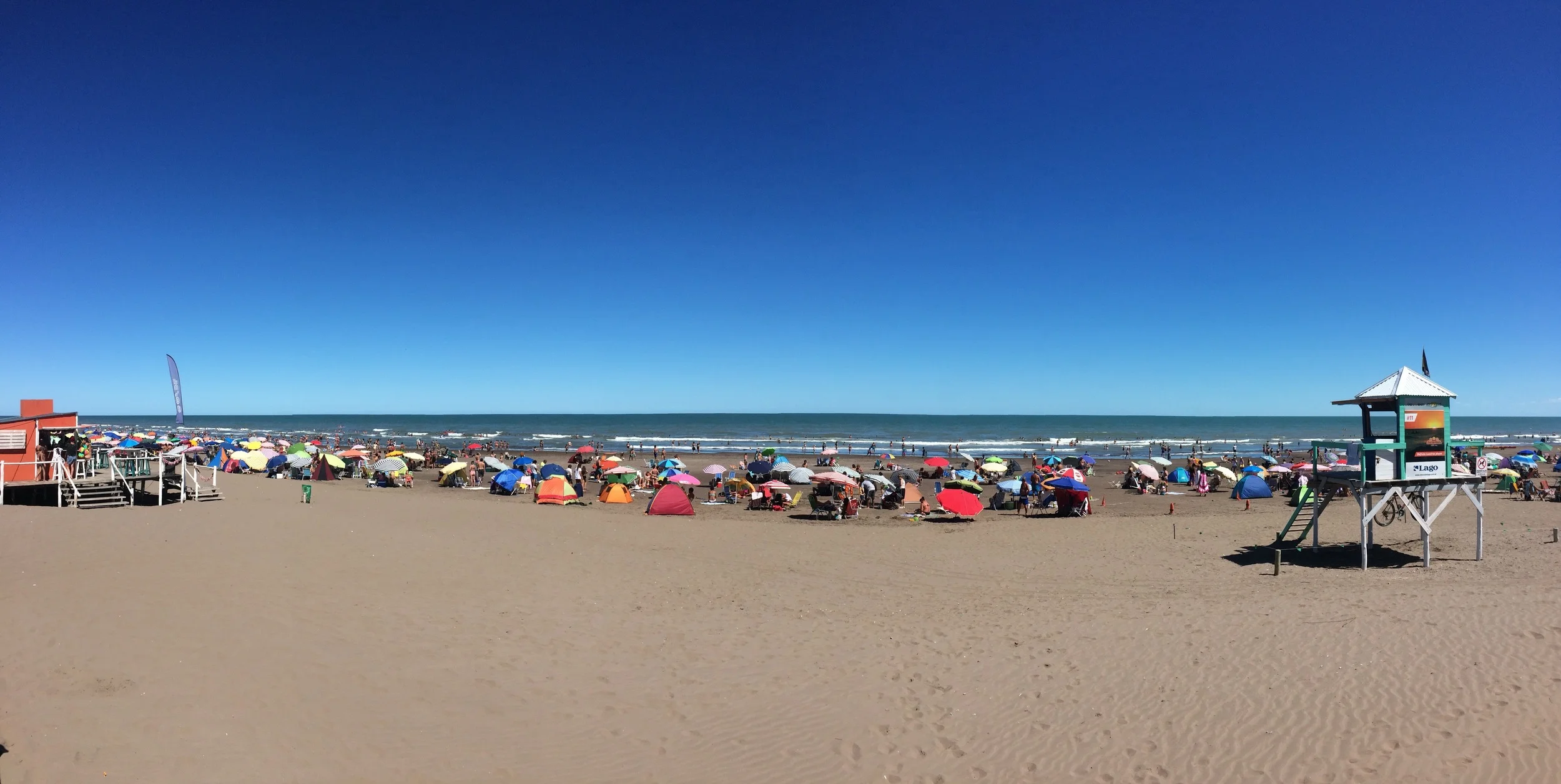
From our overcrowded campsite it was just 15 minutes until the Atlantic Ocean began unfolding before our eyes. A 60km long sandy beachfront lay just beyond the center of town, the view blighted by high rise apartment buildings yet the ocean omnipresent. The beachfront atmosphere has turned the crowd into a curious collection of long-term residents and vacationing families. Having arrived during a holiday weekend smack dab in the middle of summer, the town’s population ballooned from 8,000 to over 80,000.

On the way back towards the port we passed through some of Valparaiso’s many hills, which were awarded UNESCO world heritage status because every time you turn a corner, it’s time to take the camera out for another shot. Without a doubt, Valpo is South America’s premier street art city. Every staircase, wall, and door in the city center is home to another piece of art, the majority of which are downright stunning in their complexity, vivid colors, and attention to detail.
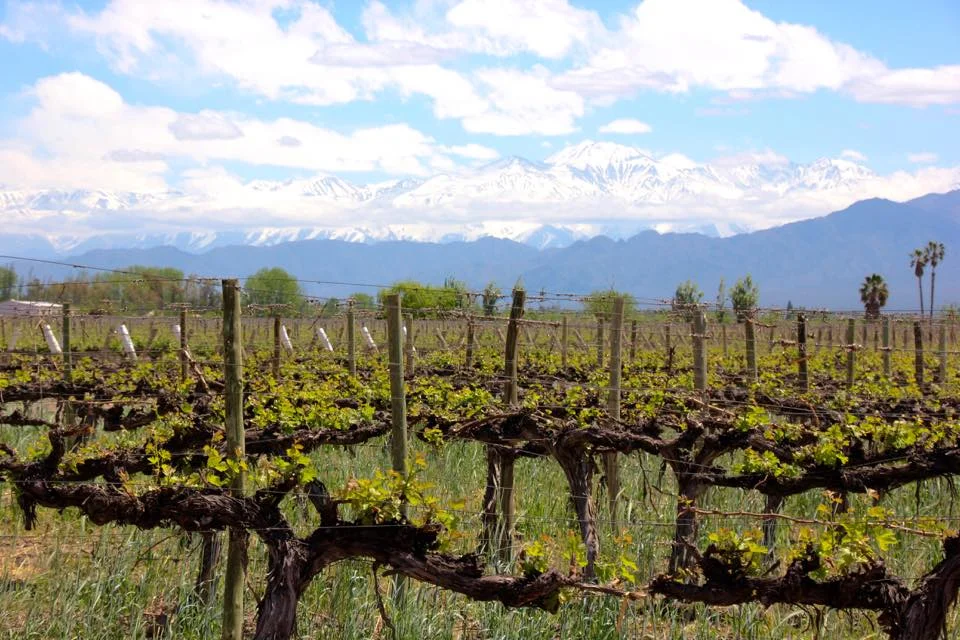
The first stop of the day was at La Añorada, a picturesque winery on the outskirts of town. Our affable tour guide was named German, and he fired off joke after joke while getting us acquainted with the winery’s production cycle. One of the coolest parts of the tour was how German led us through the various stages of making Malbec, the blend which Maipu is most famous for. He poured us tasting from monstrous twenty foot high vats at two different points in the fermentation process, then led us down into the cellar and siphoned a more mature oak blend straight out of the barrel before finally pouring a version of the finished product from the bottle.
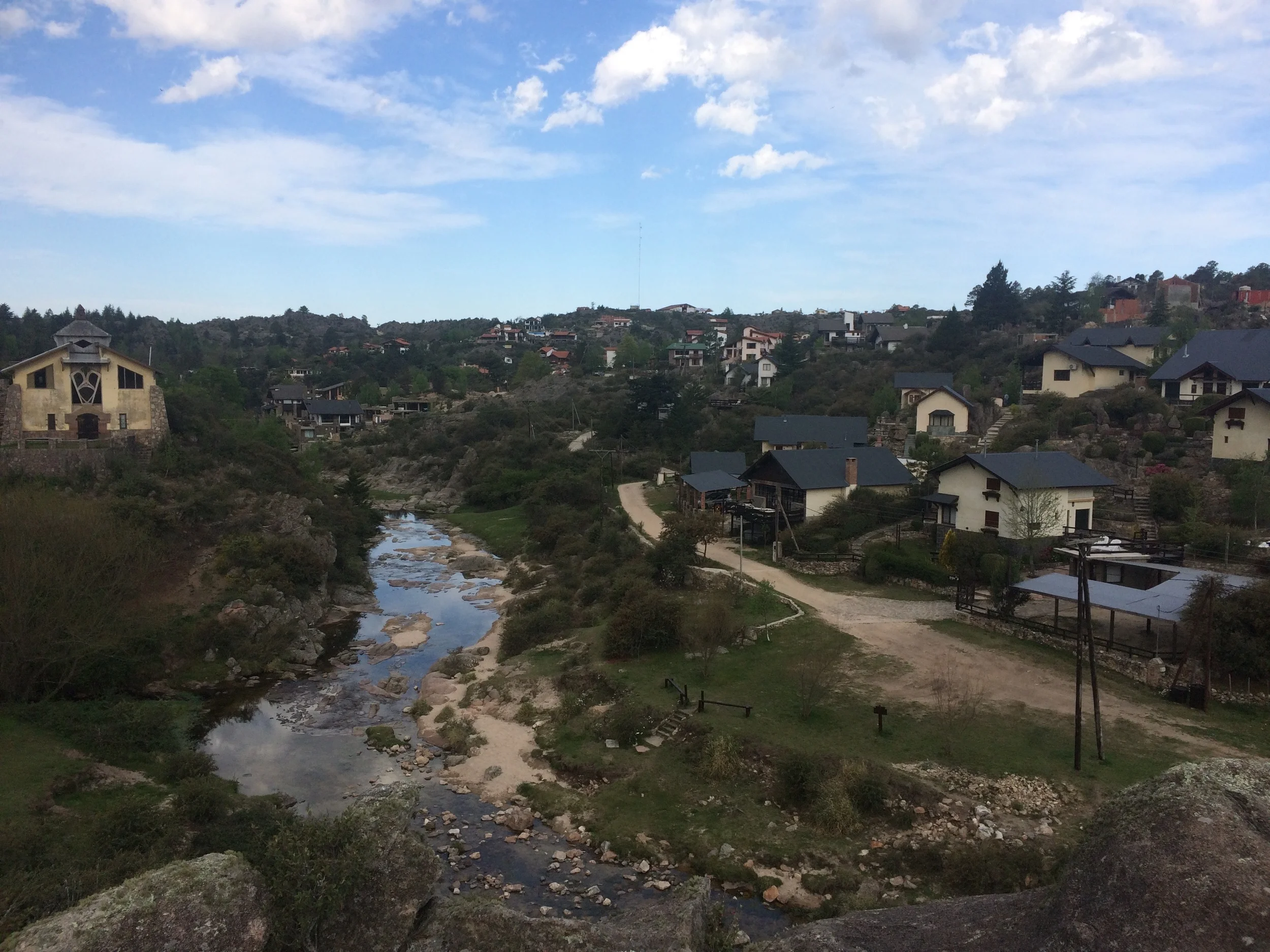
Maybe we’ve just been extremely lucky so far, but hitchhiking in Argentina has been infinitely more rewarding than riding expensive tourist busses. Each driver has been more than willing to share his hospitality, stories, and knowledge of the country while meanwhile being equally eager to learn about us. In short, they want to ensure that our experience traveling across Argentina is one to remember. So far, they've certainly succeeded.
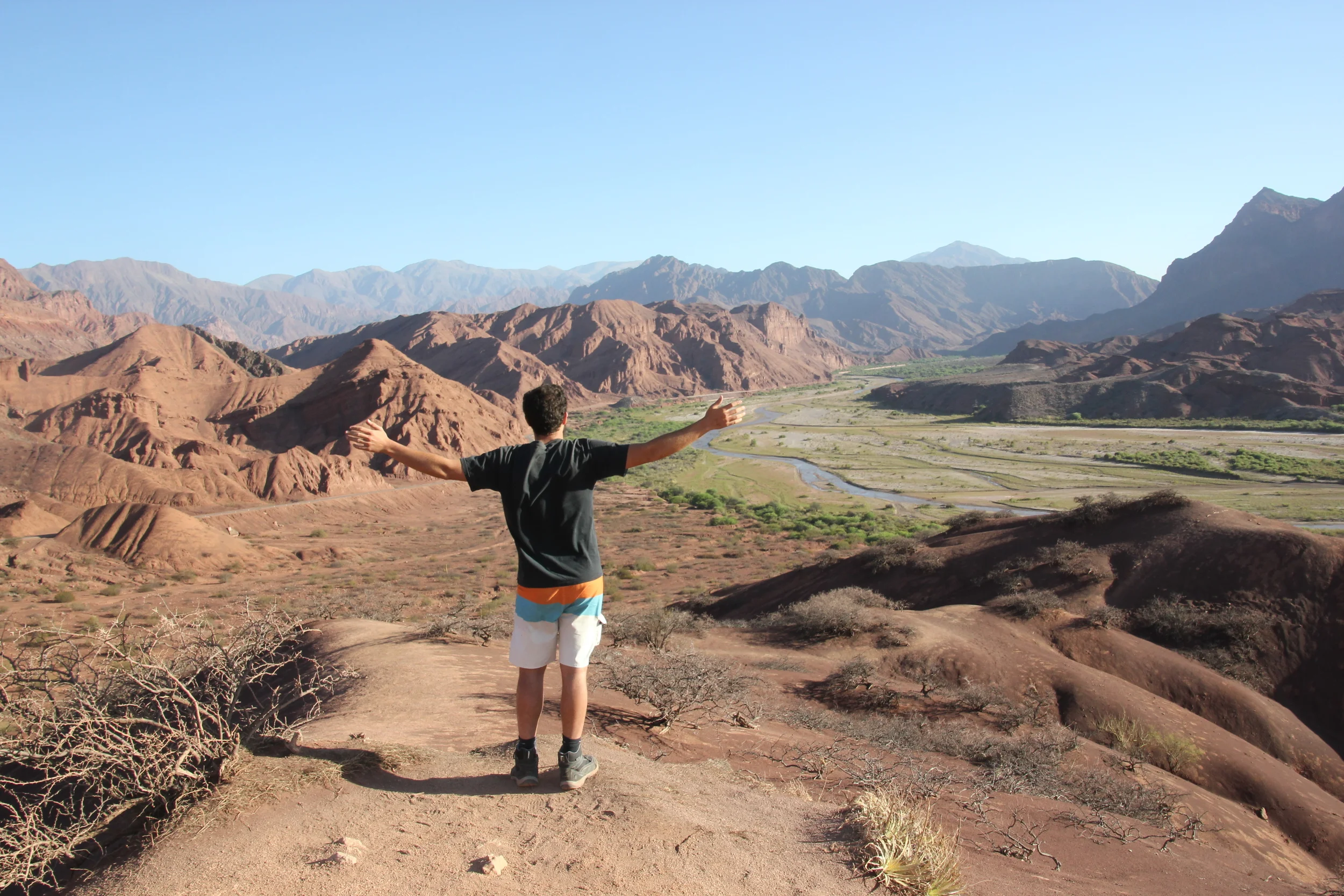
Just a few kilometers into the journey we came upon the Quebrada de Las Conchas, a valley world-renowned for its spectacular views. Over eons and eons, a gushing monstrosity of a river and this area’s forceful wind have eroded a wide canyon and carved away at its sandstone rock. What remains is a weird and wondrous landscape of magical rocky landscape. For the next two hours I stared slack-jawed at the glory of some of mother nature’s greatest artwork, muttering “wow” under my breath every time we rounded another corner.
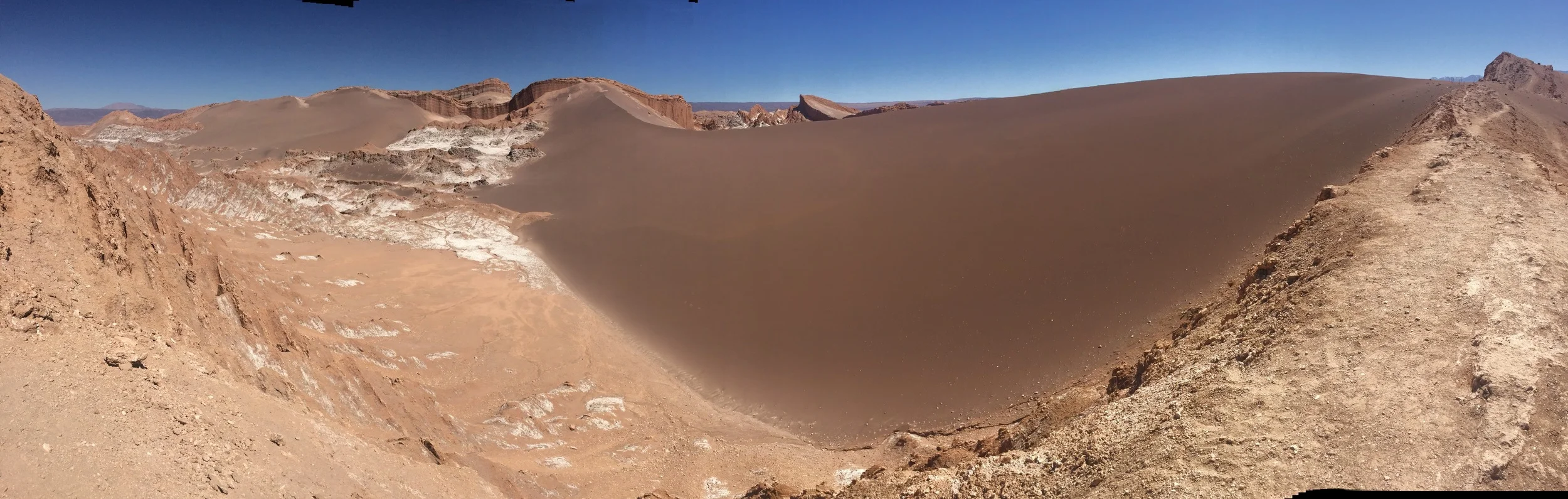
Seeing as it was only 10AM I should have been surprised my friends were ready to start drinking, but then I noticed they were still wearing the same clothes from yesterday and clearly hadn’t been home. I happily forked over the pesos (less than 25 cents), which kicked off an authentic example of Chilean hospitality. For the next six hours we walked around almost every street the tiny pueblo has to offer, as I was treated to the cheapest and most insightful local walking tour San Pedro has to offer. They showed me where to buy the cheapest food, the most delicious empanadas, and some of their favorite spots to just hang out and take in astounding views of the ring of Volcanoes around the desert.
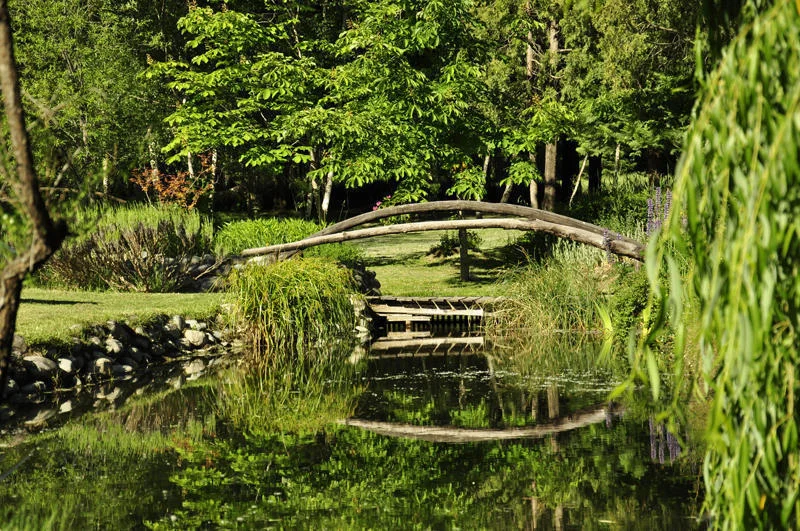
It seems that the owners here have thought of every tiny detail: the indoor area is a constant serenade of calming music, the wooded backyard has trees perfectly spaced to hang half a dozen hammocks, a tiny brook runs through the outdoor garden to ensure the only sound is falling water, and most importantly there's an on-site restaurant serving up delicious food and homemade beer. As I sunk into a hammock just minutes after arriving, a deep feeling of inner calm washed over me, a stark contrast to the hubbub of the city and the pulsating beats of music that seemed to constantly permeate our campsite. The trees blanketed me in shade throughout a scorching afternoon, ensuring that depending which way the wind blew I was subject to the smells of either pine trees, lavender flowers, or eucalyptus leaves.

Flanked on all sides by luscious green mountains heavily dominated by tree cover, the beautiful setting of Futaleufu was instantly a refreshing sight to our worn bodies after four full days of hitchhiking. The fresh mountain air was crisp, cool, and inviting, welcoming us to a gorgeous place. Juxtaposed against the chilled out vibe of the town is the true reason why most people find themselves here, where normal civilization feels so far away: the roaring Futaleufu river. The river rolls through the surrounding valley and is one of the best in the world for adventure sports like rafting and white-water kayaking, drawing tourists and professional adventure seekers from all over the globe.

Just as we crossed the top the weather began to clear, starting a long and beautiful afternoon with plenty of sunshine and beautiful views all around. Oddly enough, heading down the other side turned out to be twice as hard as the ascent. Once the snow petered out, the rocks offered no sense of support or control, leaving us half-sliding half-stepping alongside a forceful river. We triggered more than a few rockslides, as one step on an unstable rock could send a whole cascade down the mountainside. Eventually the river turned into a waterfall and it was too steep to follow any further, so we hopped over a ridge and under up with a full frontal view of a tremendous hanging glacier. Just below a scraggly set of peaks was the packed sheet of ice, so wide that it’s run-off was producing a score of waterfalls slowly carving out smooth features in the rock wall.

Before even finding a campsite, we were whisked away on a boat tour to the city’s main attraction: Las Capillas de Marmol (The Marble Chapels). Over millions of years, the imperceptibly slow erosion of the lake cutting into nearby stone has caused nature to carve out the most unbelievable caverns my eyes have ever seen. Marble white rocks hang precipitously over openings wide enough for boats and kayaks to navigate directly through, allowing us to get up close and personal with the smooth rocks and the perfect reflection along the still water.

Quickly the trail gave way to open plains and we lost our way, slogging through swamps, crossing forests and streams, and eventually climbing a steep tree-lined hillside. I was out of breath by the time I reached the top after one last rock scramble, but before I could catch my breath - WHAM! - the wind hit me straight in the face. Perched at the top of a ridge, nothing stopped the ferocious gusts coming down off the ice sheet, so we couldn't even stand up for a few minutes without getting knocked down again.

As we continued down the stairs to the overlooking balconies, it immediately became clear why glaciers like this one are capable of retreating or advancing up to two meters in a single day: in the peaceful morning light birds chirping were continuously interrupted by the intense sound of ice calving off and falling into the lake from a height of 40 or 50 yards high. The constant threat of spying one of these awesome breaks had us swinging our necks back and forth along the front wall, which is an astounding 3 miles long and an average height of 240 feet!

Like a broken foot protruding off the leg that is South America, Tierra del Fuego is one of the most rugged and wild lands that man has ever civilized. It was originally named for the incessant bonfires that naked local tribes burned to stay alive through their grueling winters, but unfortunately Spanish colonization largely exterminated their culture and languages. After crossing the Strait we worked our way across unmarked dirt roads, the landscape flat for as long as the eye could see without any signs of civilization
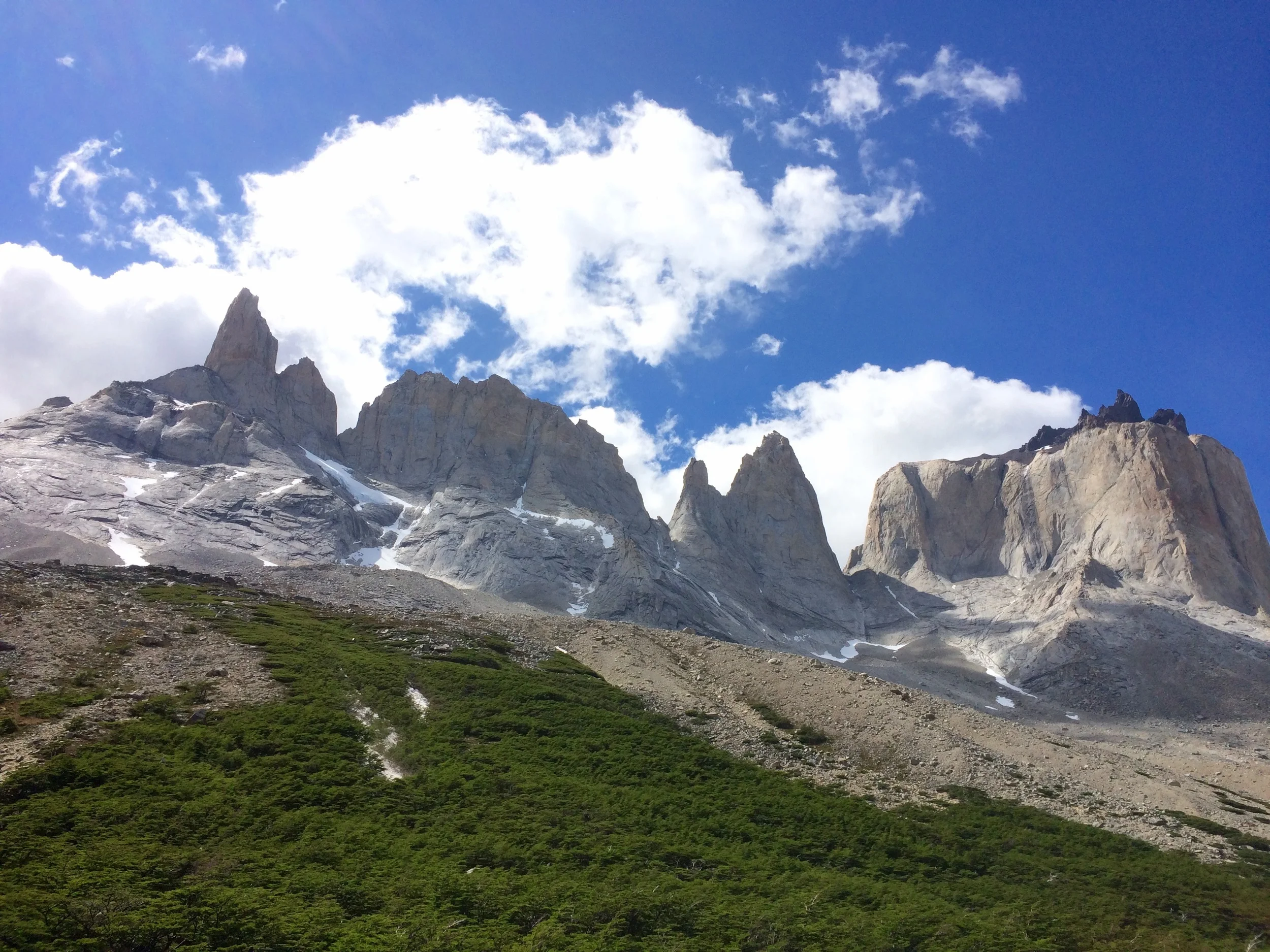
Once we reached the trail’s highest point I kept my eyes fixed firmly on the horizon, knowing what was in store ahead. Soon enough, I got my first glimpse of the monstrosity known as Glacier Grey. One of the park’s centerpieces, the massive chunk of ice spans across the entire width of the lake and farther back than the eye can see, steadily rising in height. At the front precipice is a sheer vertical wall of ice, at risk of calving off and sending great chunks into the abyss at any time.
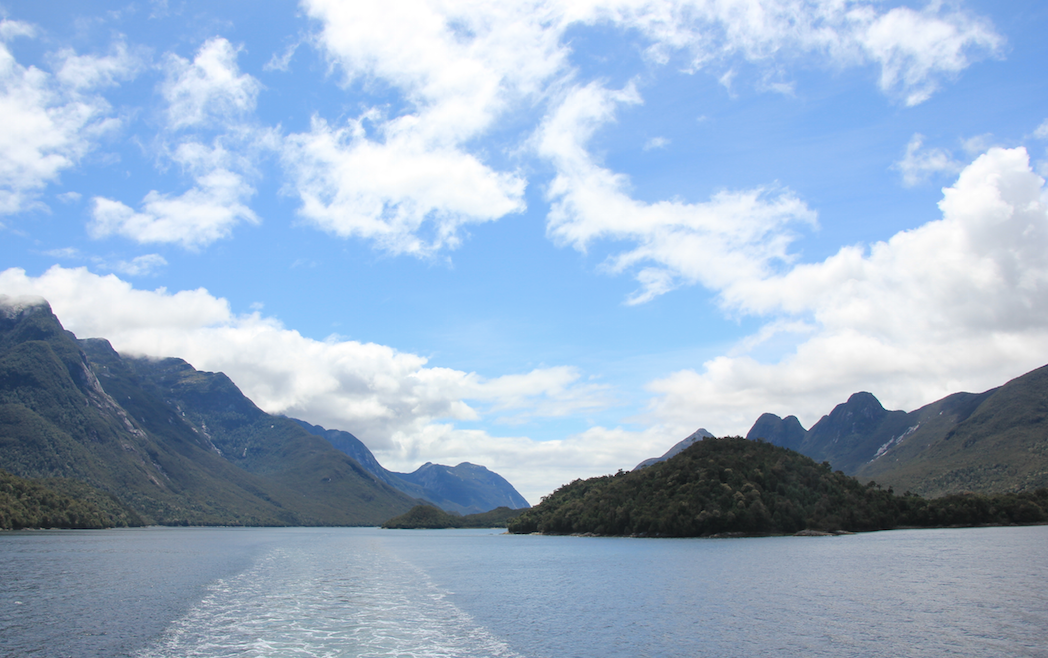
In the morning light we pulled into the port of Balmaceda, and what a glorious site it was. Sun-draped in the morning, with placed waters reflecting the sun’s light, it was surrounded by numerous islands of mossy green rocks. Unexplored forests abounded in the background and right in front of us there were calm sandy beaches with waves gently lapping at the surface. The only sign of civilization was a roughly built gangway sticking out into the secluded bay; if there’s a slice of paradise left, this is it.

Friday dawned as a completely different day. From our hillside perch we head a gorgeous vista of the one thing we desired most for the hike back the trailhead: sunshine, and plenty of it! The wave still crashed on the rocks with reckless abandon, but the wind had ceased its incessant howling and left us with the dawning of a gorgeous day in Chiloe’s remote wilderness.

After scoping the tourism options in town under the guidance of the gregarious Marco, I opted to split the city’s main attractions: one day of exploring outdoors and another the city’s culture. After 10 months of traveling, I’m not going to lie: there is such a thing as traveler’s fatigue. Eventually all the markets, plazas, and churches in South America appear similar. But it quickly became apparent that Sucre is one of the most beautiful cities in South America.

Five minutes after sunrise we pulled in to the bus terminal in Trinidad, outpost to the Rio Mamoré, one of the strongest rivers in the Amazon. At this point we were completely removed from the trappings of the so-called “Gringo Trail” and had very little information to base our decisions off, but we had our sights set on renting a boat. In Trinidad we tried a few tourism offices but eventually hopped on motorcycle taxis and headed straight for the source of the river, where we heard better deals could be had. In Cochabamba we were quoted $611 USD; once we got to Trinidad it was down to $150 for a 3 day trip; by the time we pulled into a port and asked around until we found a boat driver, it was $40.
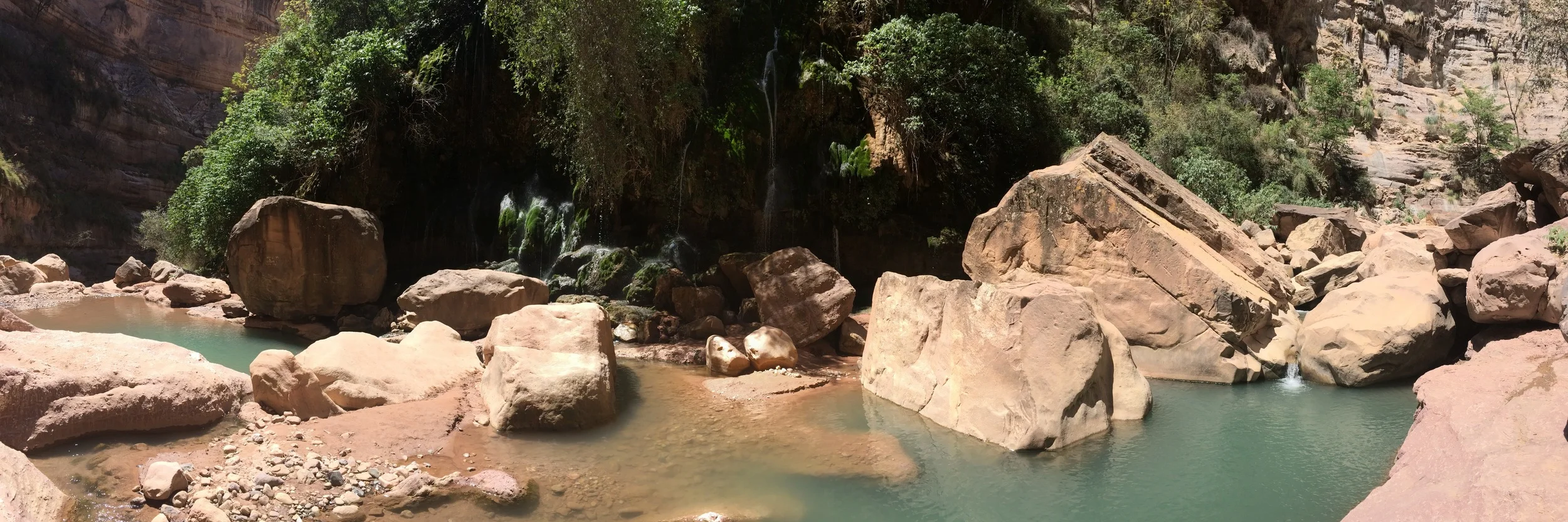
Once on the streets of Cochabamba, the hunt for empanadas was on. Quickly we found a few street carts and indulged ourselves, but we were also greeted by an unexpected sight: we landed right in the middle of a parade! Just as I finished my second empanada the square we were in exploded with sound, as a band right next to us heralded the start of a massive march. It turns out Monday was the anniversary of Cochabambian independence, and what followed for the next few hours was a show of local pride nothing short of magnificent.
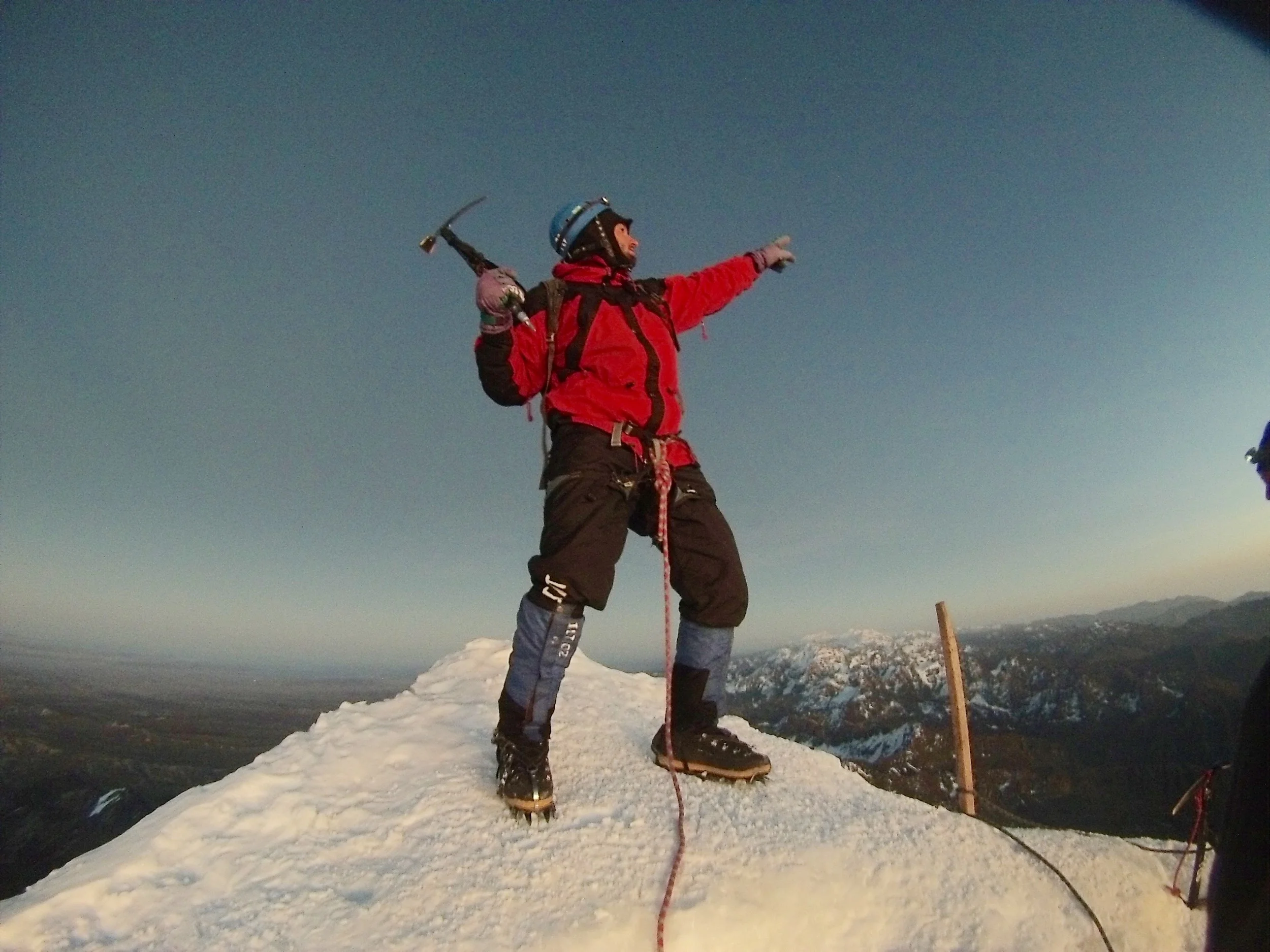
The snow and glaciers of the mountain range came into view. Directly ahead of us lay the gorgeous Potosi and to our right was the imposing Illimani, a monolith in its own right at 6400 meters. As we approached the mountain my pulse noticeably quickened. Maybe it was the 1000 meter elevation gain between the city and base camp, but as I was staring at the massive glacier adorning the mountaintop for the first time nerves started to hit me: was I really going to try and climb that? With my own two feet?
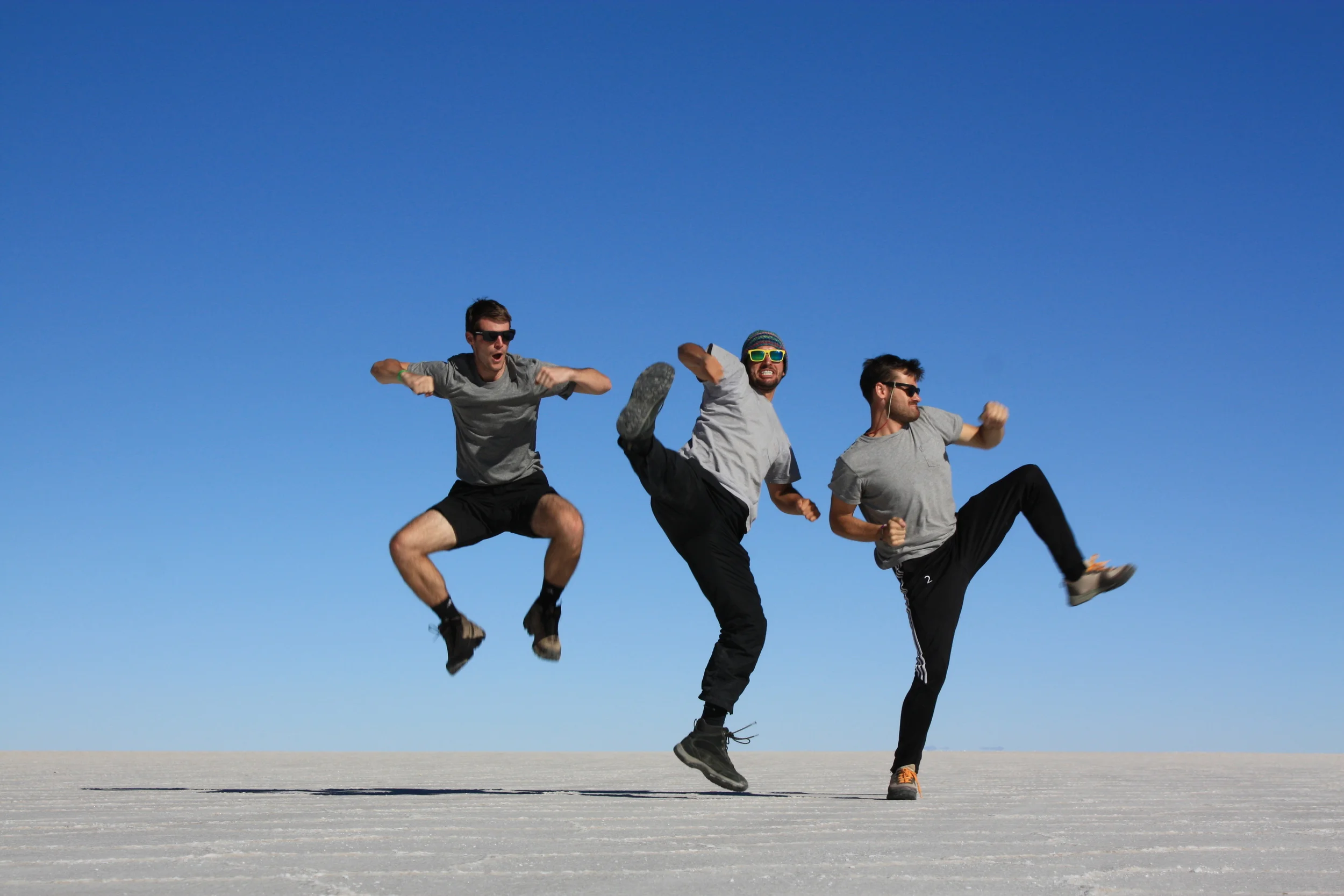
After trying yet failing to break the land speed record, we bussed to a turnoff point for a dirt path. Here was where the real fun began. For the next two hours we bumped downhill, losing feeling in our hands and arms from the intensity of rolling over rocks at such a high velocity. On our left the entire time lay vertical drop offs, some hundreds of meters to the bottom. Despite the initial trepidation of knowing that one wrong move could be our last, we started getting more comfortable and accelerating into the steep turns. Soon we were gaining speed with reckless abandon, all the while trying to sneak glances at the mountainous scenery.

On Monday I was still cold when I woke up at 6:30 for a day trip to some of the islands that dot Lake Titicaca. Stretching 189 KM across and spanning a volume of 58,000 KM, Lake Titicaca is one of those sights that exudes magnificence simply in its sheer size. Upon disembarking from the dock, our boat drifted through the deep blue waters, touched only by groups of tall reeds sticking out of the surface. We followed these formations out into the open water; just a half hour boat ride from civilization lay the first of Los Uros, the lake’s legendary floating islands.
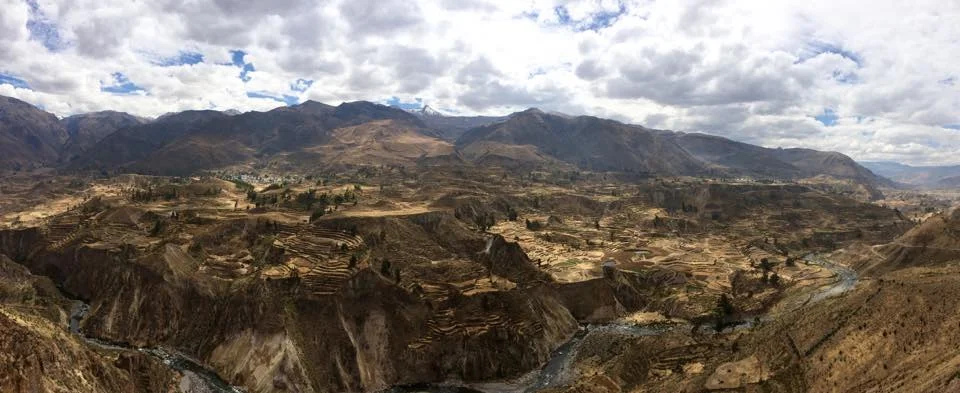
Just as the first rays of sunlight shone through over a mountain in the distance I hit the summit. Sweaty yet still cold, triumphant yet delirious, I perched myself on a rock and took in the stunning view of the valley below, our starting point now invisible at the bottom of the earth's deep chasm. Over the next half hour over a hundred hikers straggled in, each one feeling accomplished after having gained over 1200 meters in altitude before 8 AM. On the way back to Arequipa we pulled over for a couple of breaks, including a much needed hour-long soak at a hot springs, a pair of awe-inspiring views of the canyon and its surrounding volcanoes, and an entire hillside dotted with llamas and alpacas grazing in the high altitude grasslands.
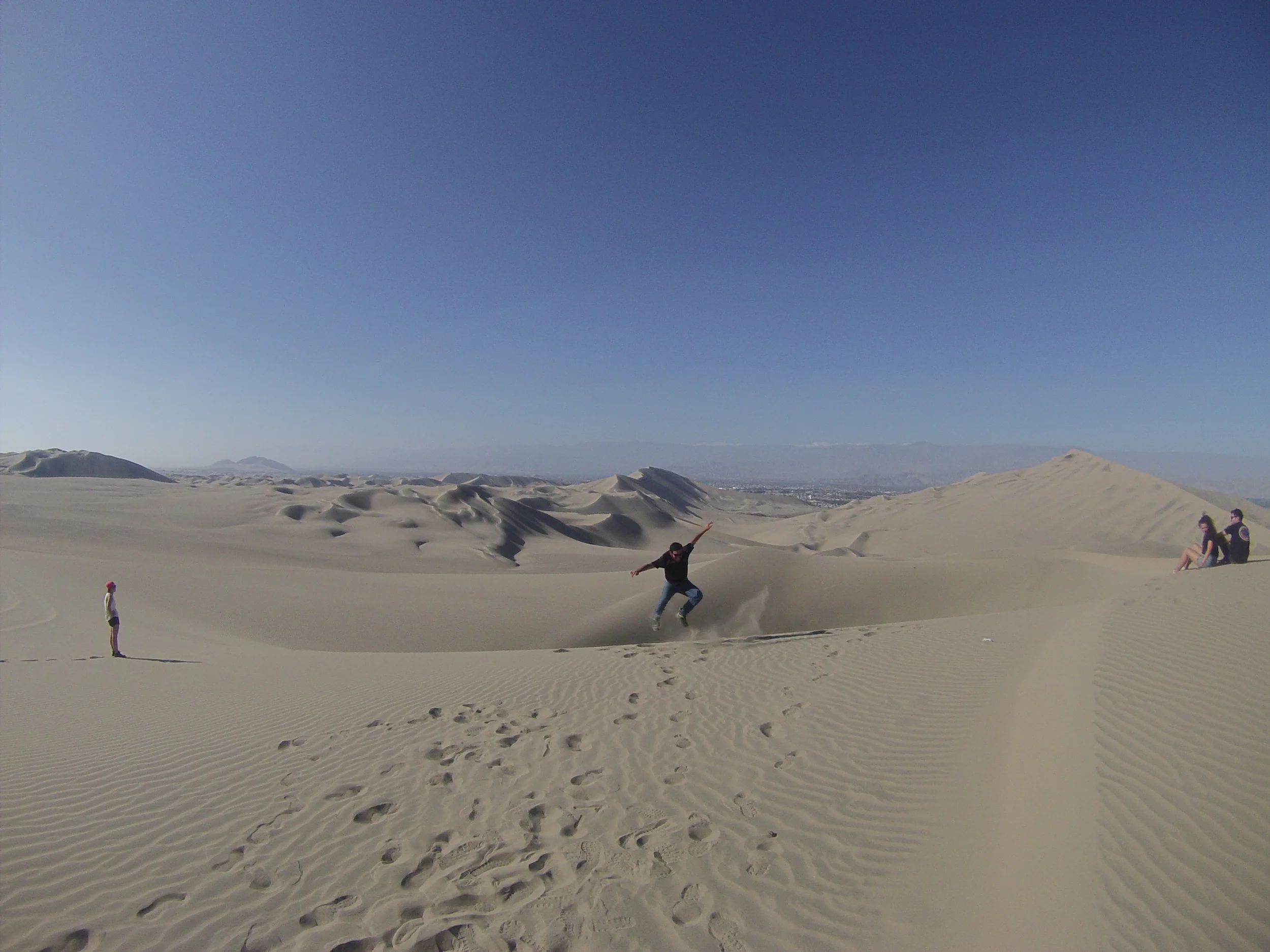
Outside of lounging and relaxing, there isn't much to do during in Huacachina except take the requisite trip that everyone offers to go sand boarding on the nearby dunes. With the sun emanating off the massive dunes, we hopped in a boogie and set off out of town, quickly accelerating as we veered off road. Our driver must have thought he was playing Mario Kart, as we set off on a veritable roller coaster ride up and over the hills as the car careened down sheer vertical drops and drifted through turns, stoking our adrenaline. After about an hour we stopped at one of the higher points in the nearby vicinity to snap some photos, taking in the eery feeling of the desert that made it feel like we had been transported to another planet.
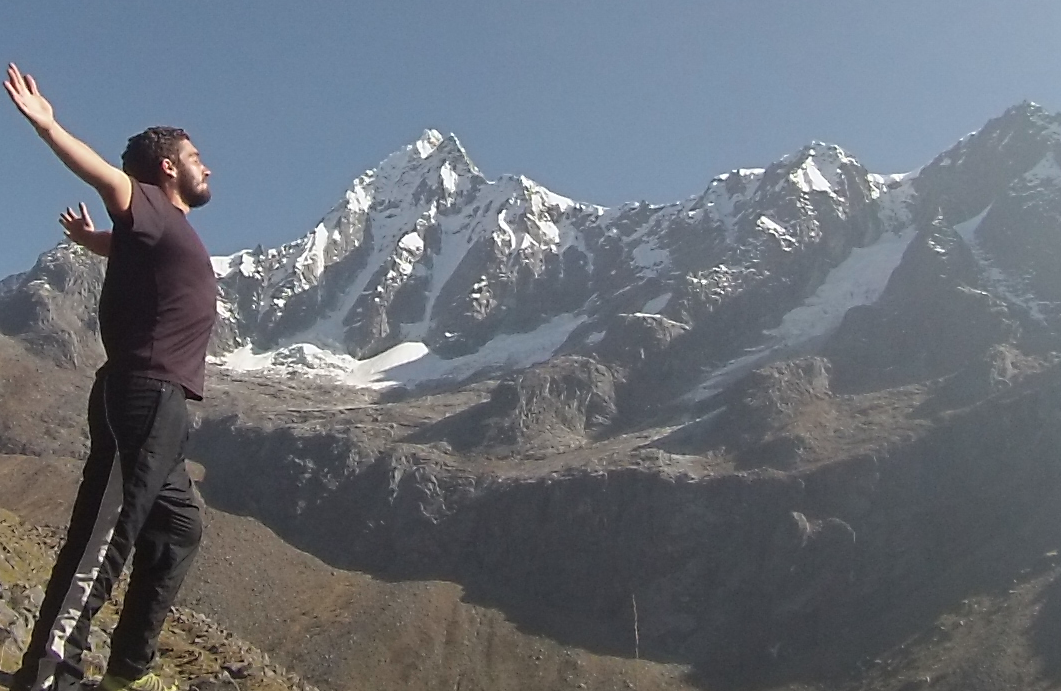
The visual reward upon making it to the top of the Union Pass at 4750 meters made every thigh-busting step worth it. Almost the entire 360 degree view included the glacier-topped peaks that give the Cordillera Blanca its name. The ridge line adjoining the two summits stretched for kilometers in both directions, adorned by snow drifts that appeared ready to plunge into the laguna just below. As I waited for the rest of the group to reach the summit I jumped along the ridge line to enjoy the various vantage points, yelling down in encouragement the calling card for the Cordillera that one of the group members, Paul, had taught us the previous day: “Todo es posible….nada es seguro” ("Anything is possible…nothing is safe").

A tiny little outpost of town that once served as a retreat destination for Incan royalty, Vilcabamba was dubbed “The Valley of Longevity” in the 1980’s due to many of its inhabitants claiming to be over 100 years old. Although those claims were later debunked by researchers, most of the hostels and tiny shops in town have capitalized on the marketing opportunity, dubbing themselves with names like “Shop of Eternal Youth”, even though they still sell Doritos, beer, and Coca-Cola. In fact, the entire surrounding area has the same calming vibe of Bali lifestyle, complete with beautiful scenery, happy locals, and plenty of meditation, yoga, and sacred healing classes.
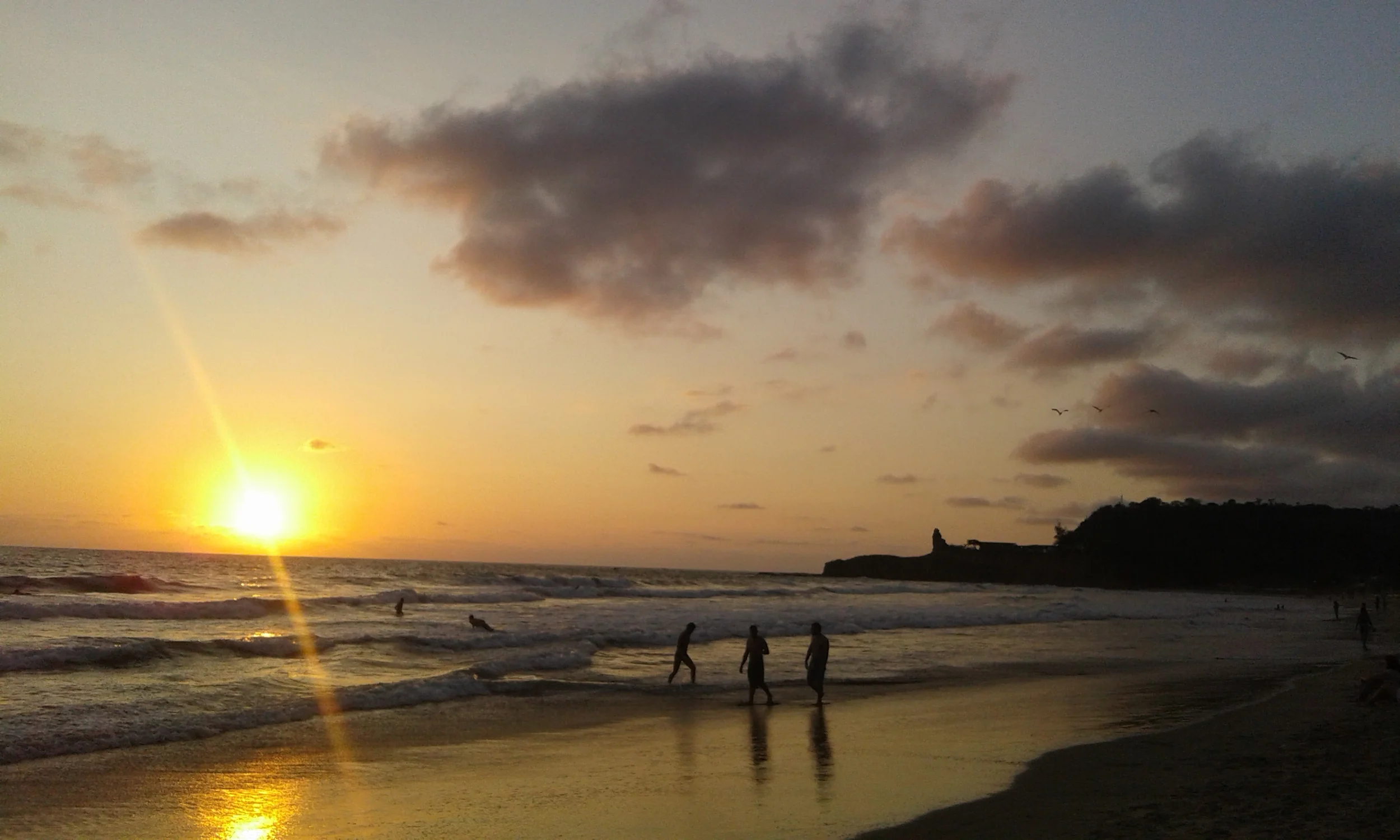
Montañita is Ecuador's premier beach destination. The surfer vibe promotes a relaxed environment and the small town is popular with both long-term backpackers and local weekenders to catch some sun and sand. In fact, it reeks of some of the same quirks as Southeast Asia's best tourism destinations. At night neon lights and deep house beats permeate through the night, ensuring that getting to sleep before dawn is downright impossible. During the day the streets are lined with handmade jewelry sellers and tiny mini-markets selling mostly beer, chips, and cookies. There's even a requisite alley of breakfast street food vendors, all with different versions of the same menu: pancakes, omelettes, sandwiches, and fruit shakes.
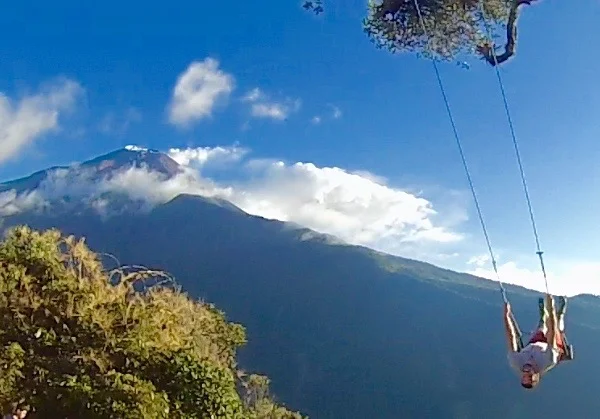
Hemmed in by luscious green cliffs and constantly covered by clouds that drift down to obscure the epic mountain views, our arrival in Banos at first seemed to usher in a period of never-ending rain. After getting continuously soaked in the rainforest, Steve and I were eager for a change of pace but unfortunately during our first few days in the Andean mountains we couldn't seem to turn a corner without encountering another downpour.
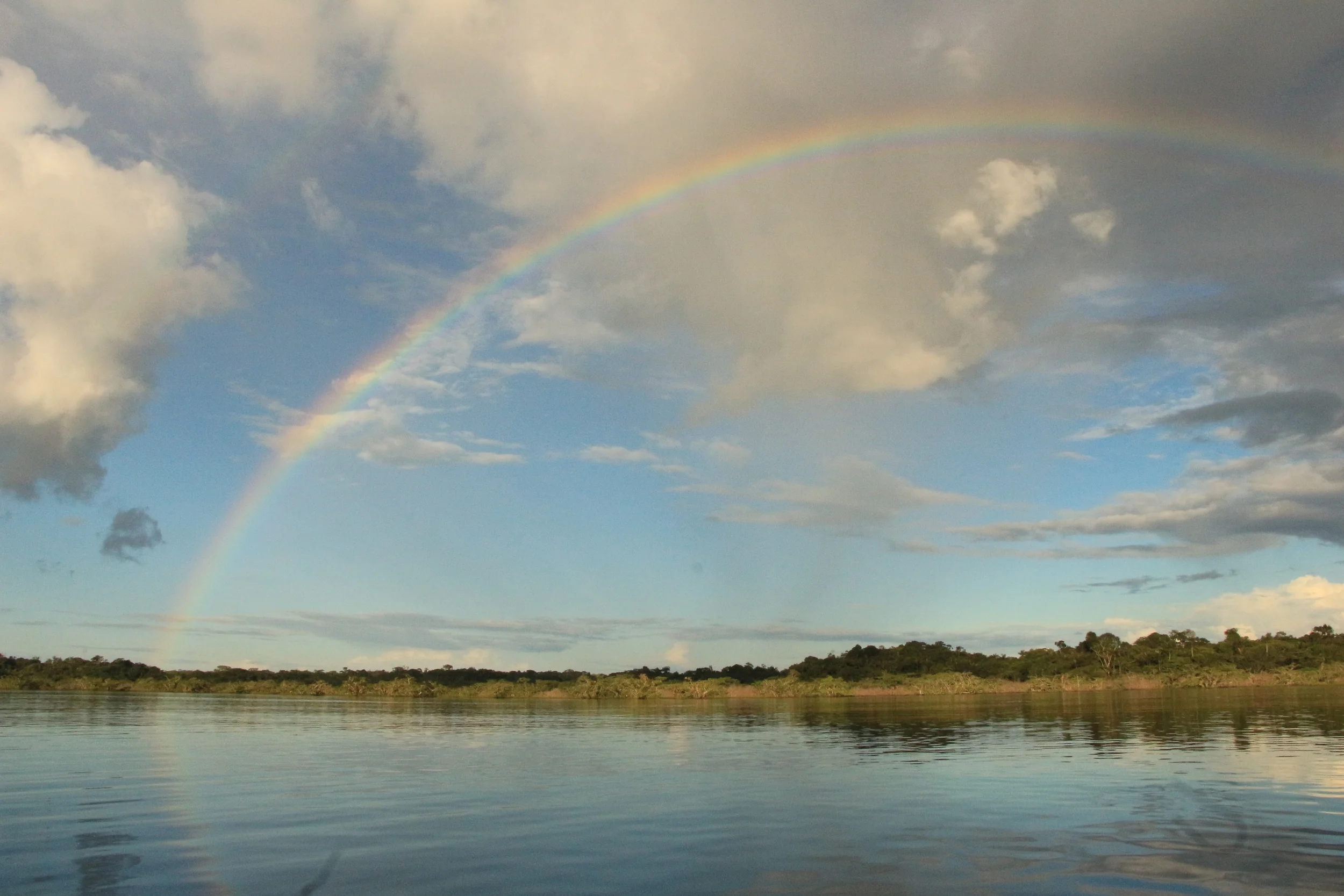
The boat ride into basecamp seemed more like going to a zoo in a boat or going on a ride at Disney Animal Kingdom. One thing is for sure: it felt completely surreal. As the rain began to lighten intermittently, Romula began stopping the boat every few minutes, pointing out no less than four different species of monkeys, toucans, bats, owls, and even an adolescent Anaconda.

Quito is a massive, energetic city filled with culture, architecture, and nightlife. Perched in the Andes over 9,000 feet above sea level, the city will quite literally take your breath away. With a population of almost 3 million, the Ecuadorian capitol pulsates with energy from the opening of the central market at 6am to the closing of the bars and discotecas in the Mariscal neighborhood at 3am.
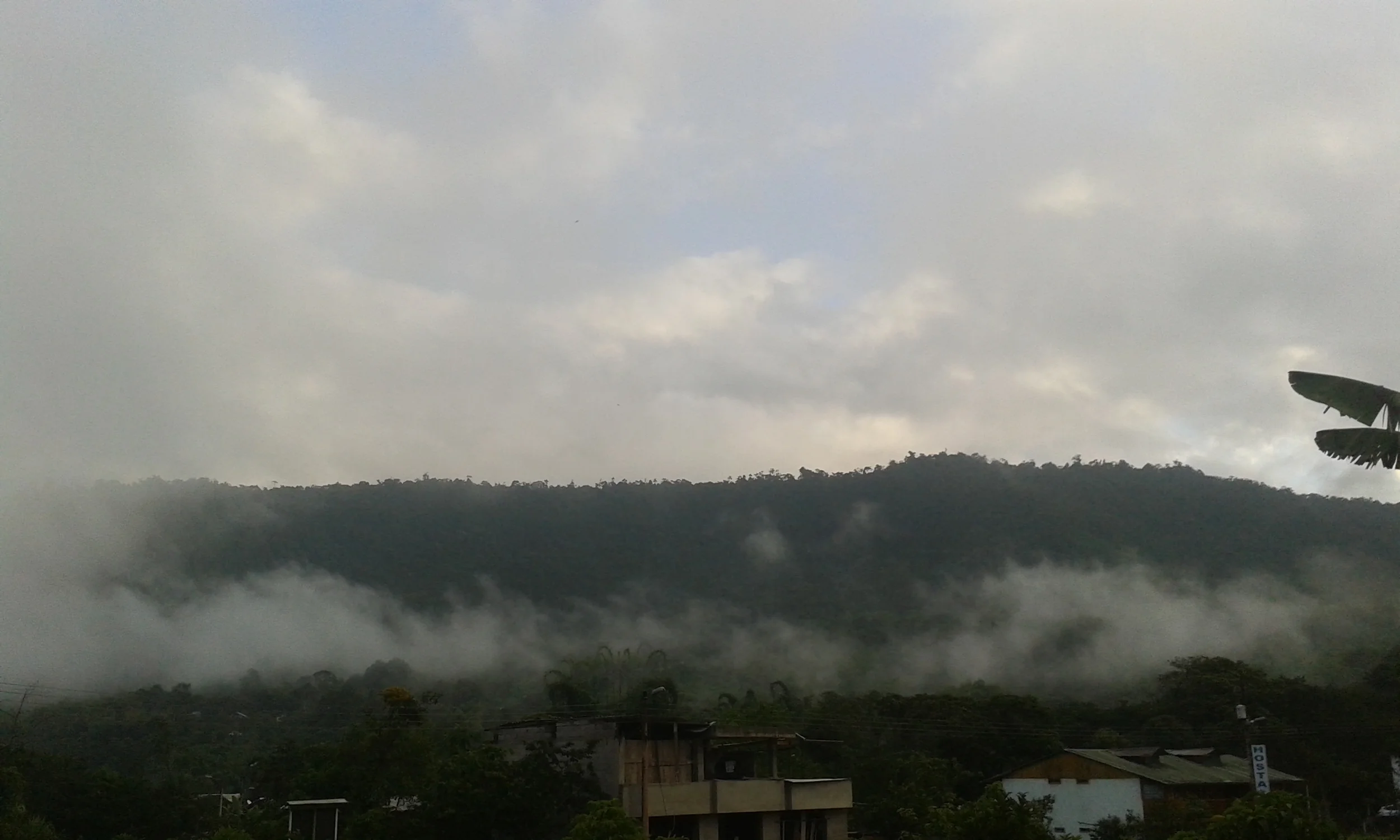
Immediately upon arriving at La Casa de Cecilia, a group of tiny wooden houses built on the edge of a nearby stream, the sights, sounds, and smells of Mindo began to refresh my spirit. The sound of tumbling water permeates through the entire property, making for a calming undertone. On the porch are a set of hammocks, perfect for binge-reading a book and relaxing, taking in a few deep breaths of the crisp mountain air.
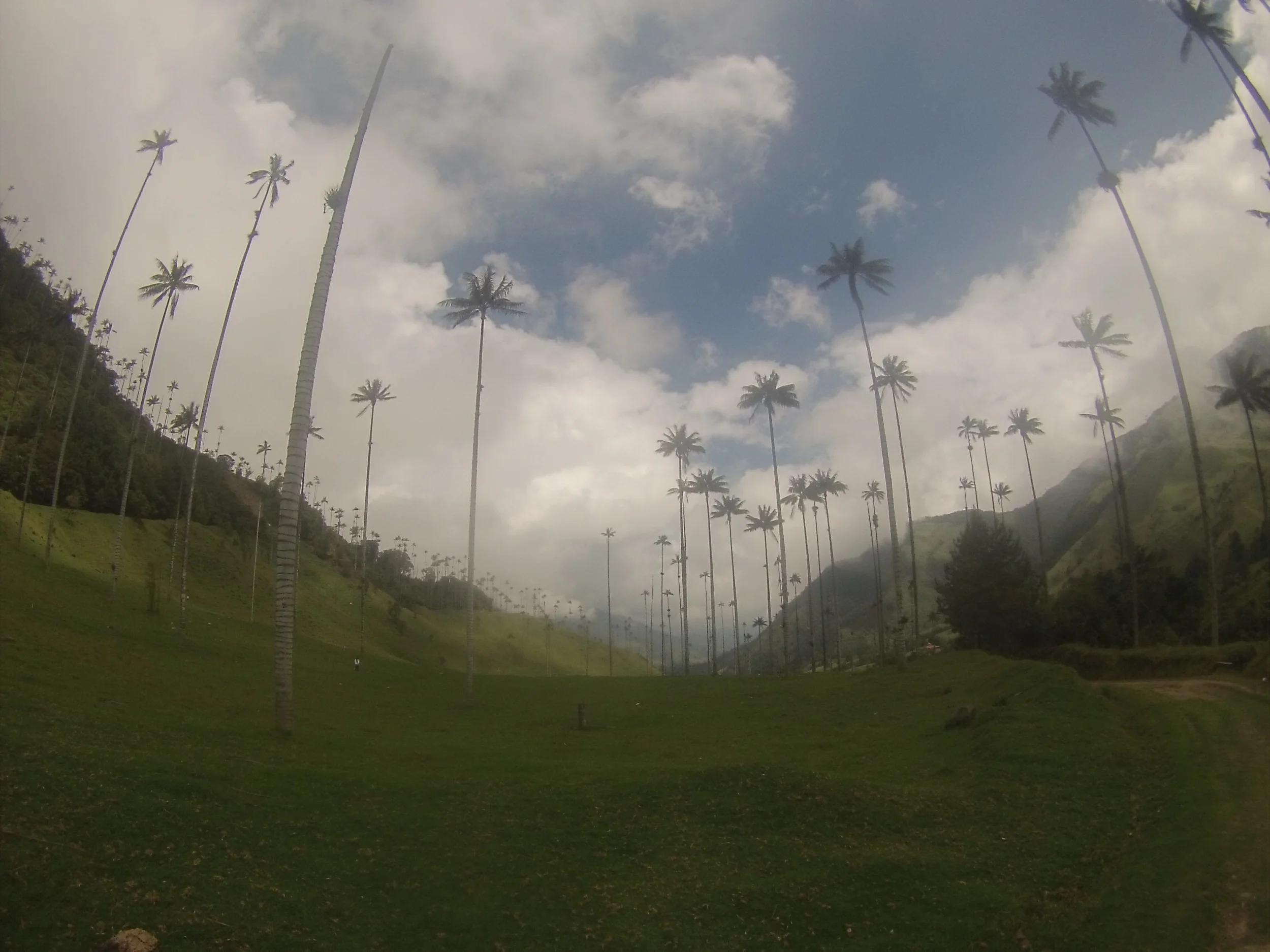
If you asked a random stranger what they associate with Colombia, motifs like coffee, salsa music, and drug trafficking might come up. But I'd like to use the photos I've taken over the course of the last week to argue for a different calling card: the great outdoors. On the way from the coffee growing region of Salento to the tranquilo streets of San Agustin (with a pitstop in the decidedly urban Cali), hiking and biking through Southern Colombia was a feat for the eyes.
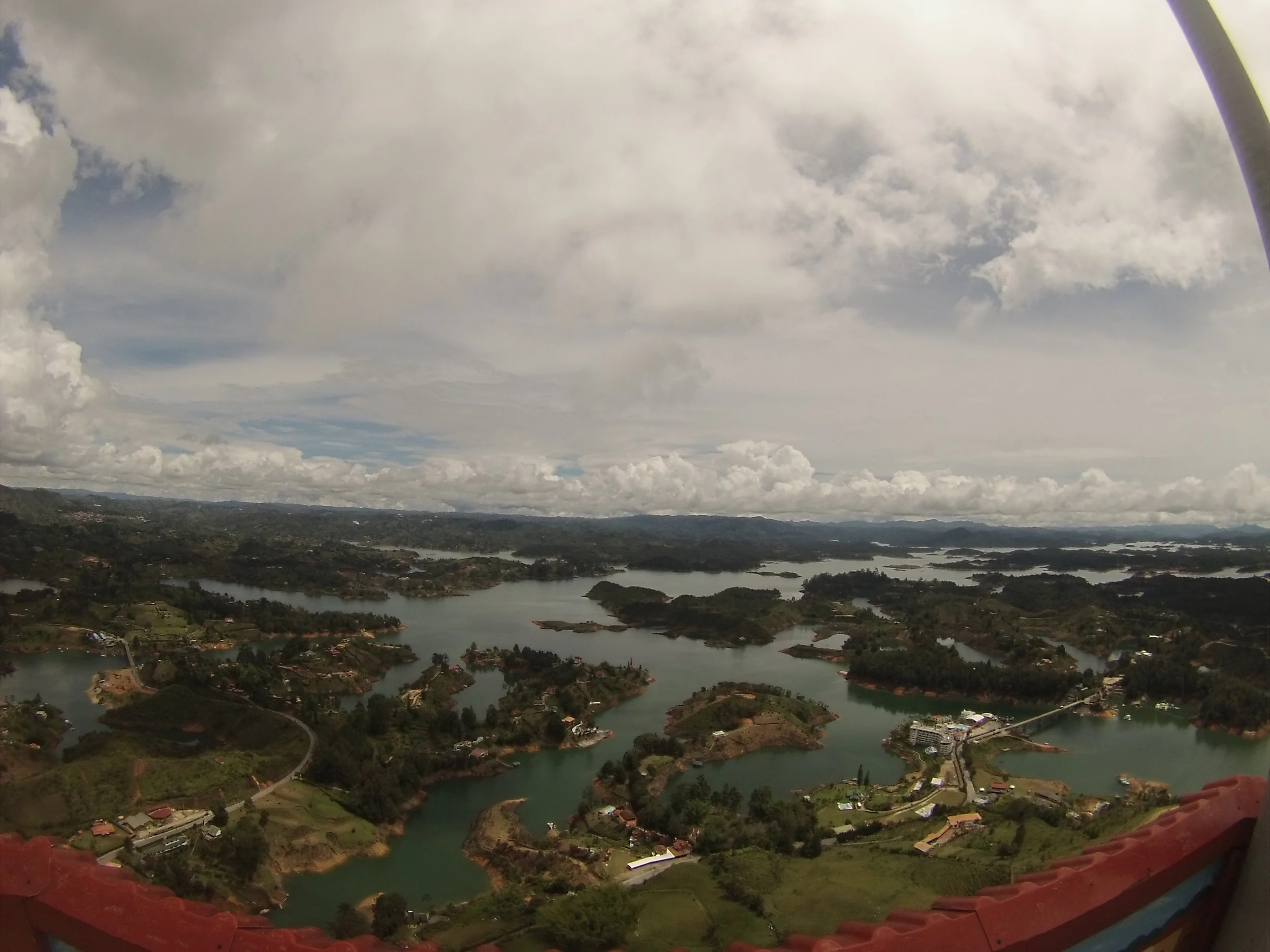
Instead of listing off facts and dates, our tour guide Pablo made the city come alive with enchanting stories of how the Paisas, the people of Medellin and the surrounding area, developed their prideful attitudes. Spanning back as far as the original European settlers of the land, Pablo explained how the area was geographically isolated, the political history of the notorious Colombian conflict, why "your parents are scared you're traveling in Colombia", and the triumphant tale of the country today, a place that is surely on the rise both socially and economically.

The definitive northern point of the South American backpacker trail, Santa Marta is a juxtaposition of contradictions. At the popular "Dreamer Hostel” where most travelers stay, one can check in, drop their heavy bags in one of the dormitories, grab a beer and lounge poolside for days at a time. With its English-speaking staff and Western food, the Dreamer is an oasis of comfort and relaxation in an otherwise hot, dirty, and developing town

Last Friday I boarded a flight to South America, starting the next leg of my journey in Cartagena, Columbia. Having survived an endless summer in Southeast Asia and August heatwaves in Washington, D.C. I thought I could handle anything went it comes to heat. But as soon I stepped off the air-conditioned plane and onto the tarmac in Cartagena, I realized how ignorant I was to the prospect of Columbian heat. Immediately, it felt as though I had stepped straight into an oven and the sweltering heat began to permeate directly through my skin.
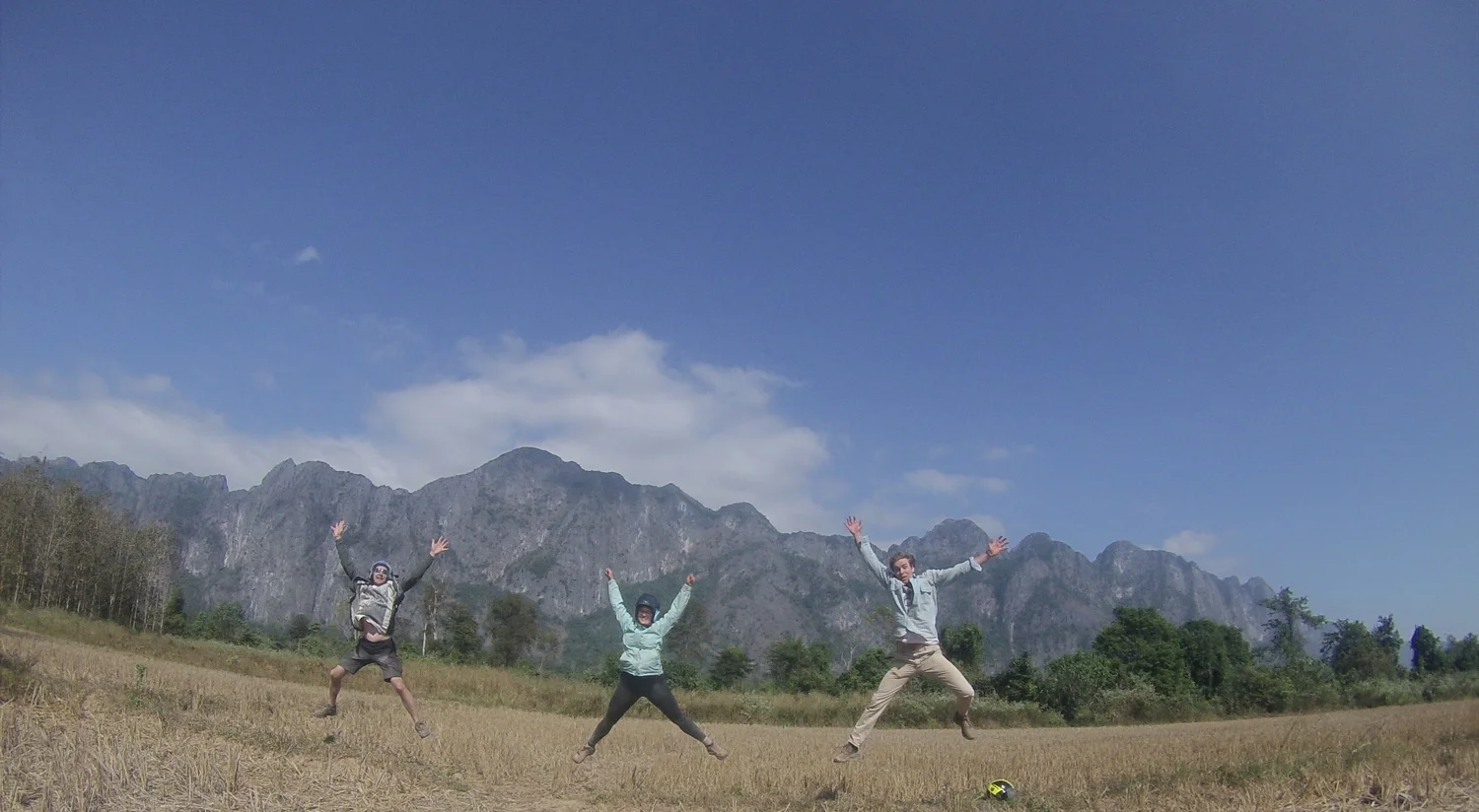
After much deliberation, the girls decided it would be infinitely more fun to jet off with us than to try and take bus trips to the surrounding caves and sights, so the six of us set off on the open road by following the shop owner’s directions: “Go straight. Then straight. Then straight again.”
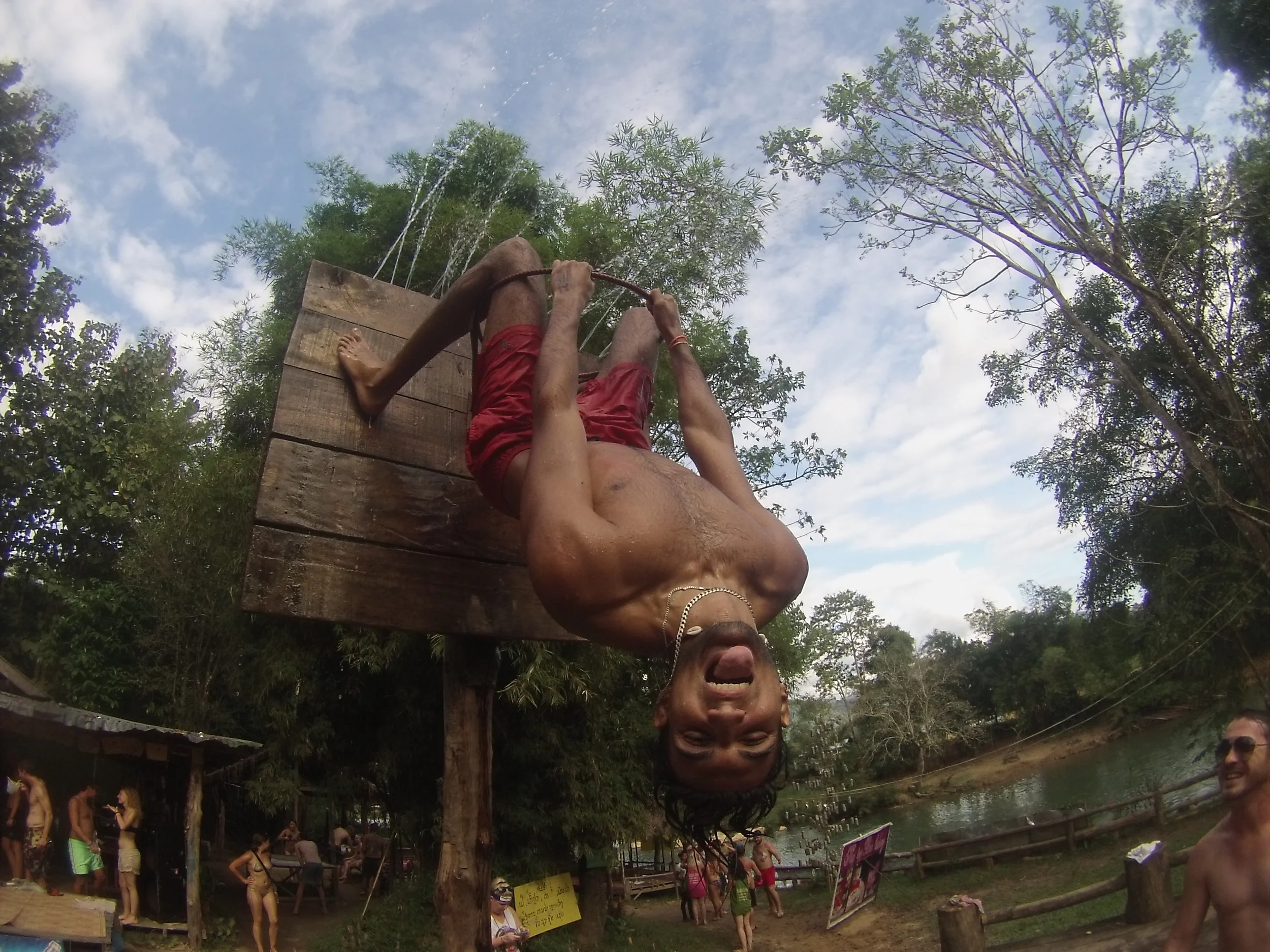
Undoubtedly the aspect of Vang Vieng that I enjoyed most was the wonderful people I was incredibly grateful to meet and spend time with. Rasmus, Jonas, and Samir are three friends from Sweden who I was lucky enough to encounter in FOUR different locales along the trail from Thailand into Laos. They are a hilarious threesome who are unrivaled in their ability to bring entertainment and unstoppable laughter into my days on the road.
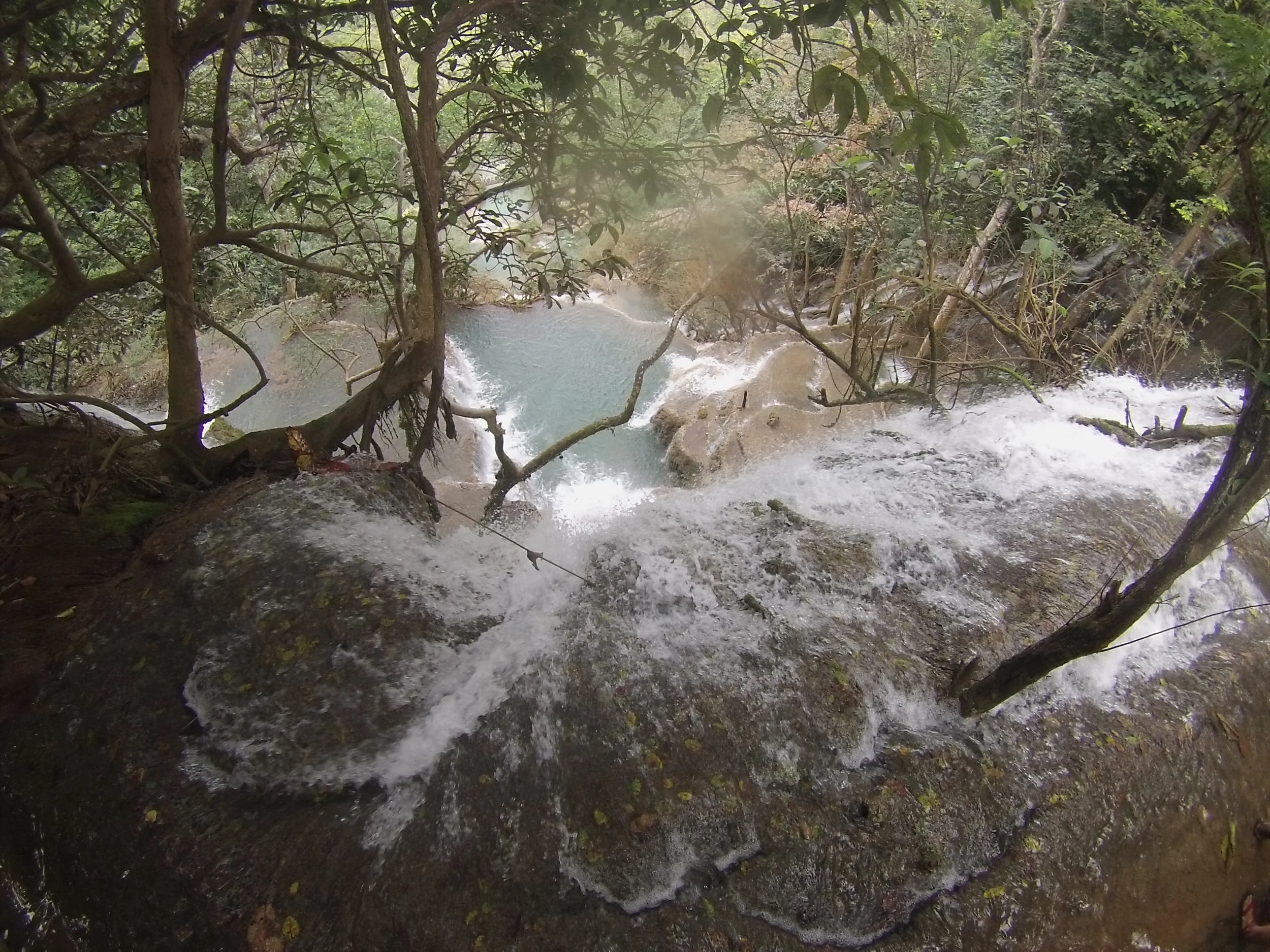
For the first three days after arrival into Laos, I trekked deep into the remote corners of the jungle with the Gibbon Experience, an outfitter that has pioneered “canopy tourism” by creating a network of ziplines and enabling travelers to see and hear the black-crested gibbons, one of earth’s most fragile and beautiful endangered species.

After spending three months in the wonderful landscapes of Patagonia spending a paltry average of $30 a day, I decided to write a book about how I made this a reality, in hopes that I would open up such an adventure to other like-minded travelers. Patagonia On A Budget is available to purchase on Amazon.
Traveling in Patagonia doesn't have to be as expensive as packaged tour operators, TripAdvisor and Lonely Planet might make you believe. With Patagonia On A Budget, you'll learn:
The best value on the craziest adventures
Prices and details for accommodation, transportation and activities in every destination
Detailed maps and itineraries of the most popular backpacking routes
Recommended campgrounds with the best rates and facilities
Instructions and safety advice for hitchhiking
The electronics, websites, and applications to depend on during your expedition
Special instructions for surviving and thriving during long hikes through national parks.
It's easy to start with some basic queries that eventually require refactoring due to performance reasons. In this post, I'll walk through an example query that leverages a SQL join to improve database response time.